Kotor
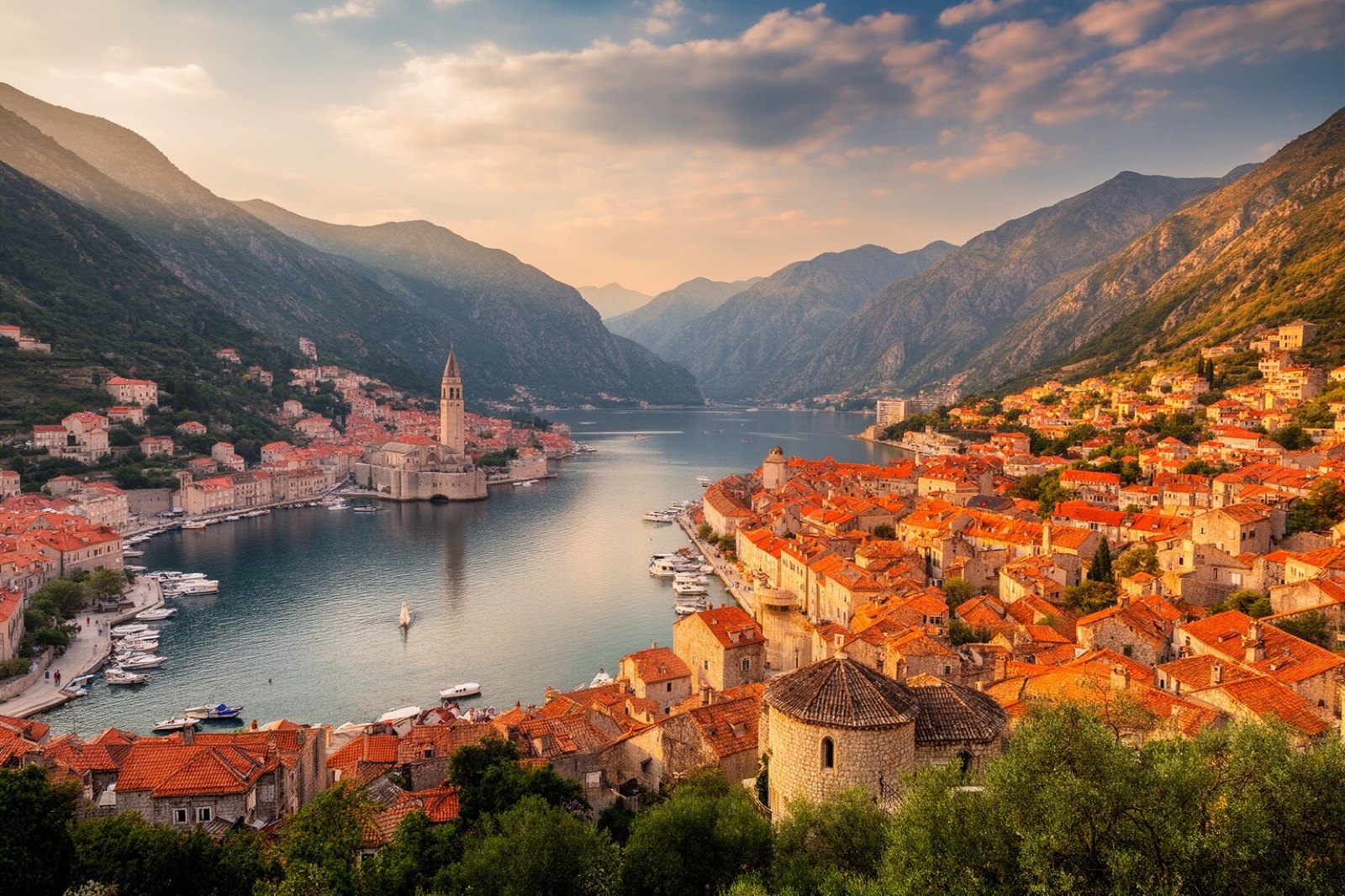
A jaw-dropping fjord-like bay with a medieval old town and low costs — but residency now demands a €150k property buy, healthcare is basic, winters are very wet, and Montenegro is outside the EU.
For an American couple, Kotor runs about $2,200 a month — though the flight home is a long one.
Kotor by the numbers
Visa & residency for Americans
Montenegro has NO dedicated retirement visa, and the main path just got pricier. Since Jan 2026, property-based temporary residence requires buying real estate with a tax-assessed value of at least €150,000 (previously no minimum). The permit is one year, renewable annually, and does NOT allow you to work locally. Alternative bases include forming a Montenegrin company, or proving sufficient means — typically a deposit of ~€3,500-4,000 in a local bank and/or stable foreign income around three Montenegrin minimum salaries; the income figure is the soft spot (set to 0 here as there's no clean published threshold for a pure-retiree route) — confirm with a local lawyer. Montenegro is NOT in the EU or Schengen, so this grants no EU mobility, and time here doesn't count toward EU residency.
Your Montenegro residency, mapped to your situation
Where you're headed, who's going, and what you're working with — five questions puts your file on the desk. When a visa specialist clears our bar for your country, you're first in line for the introduction.
Map my Montenegro visa path →What living in Kotor is actually like
Adequate for basics; serious care means leaving the country. Kotor General Hospital (public) covers emergencies, internal medicine, surgery, gynecology/obstetrics and basic specialties, and private clinics in the bay — e.g. Milmedika Polyclinic in nearby Tivat — offer English-speaking doctors and quick diagnostics. But for anything complex, expats routinely travel: to the Clinical Centre of Montenegro in Podgorica (the main tertiary hospital, ~1h15m), across the border to Dubrovnik (~1.5-2h), or to Belgrade. Quality international health insurance is strongly advised; emergency number is 112. Nearest world-class care is well outside Kotor.
Health cover for retiring in Montenegro
A broker that compares plans across the major international insurers — including plans that cover you past 65.
Compare plans for Montenegro →Mediterranean, but unusually wet. Summers (Jun-Aug) are hot and sunny — highs ~30°C, with spells to 34-35°C and occasional thunderstorms; humidity is lowest then (~53% in August). Winters are mild (daytime ~12°C, rarely freezing) but very rainy — Kotor gets ~1,390 mm of rain a year (December wettest at ~185 mm), and humidity tops ~88% in January, with strong southerly winds funneling through the bay. Spring and autumn are pleasant. Expect a damp, grey, sometimes stormy winter.
Very safe overall. Montenegro ranks well on the Global Peace Index (safer than the US, France, or the UK by that measure), and violent crime is statistically rare; Montenegro carries a US State Dept Level 1 (Exercise Normal Precautions) advisory (reissued ~Mar 2026). The realistic issues in Kotor are warm-season petty crime and scams rather than violence: pickpocketing in summer crowds, and notably taxi overcharging (insist on metered/agreed fares; local trips should be ~€10-20), cruise-port price gouging, and dodgy unlicensed tour vendors. Police are present in tourist centers. Women alone generally report feeling safe; off-season the bay is quiet and easygoing.
Small but real and growing along the bay. Kotor, Tivat (anchored by the Porto Montenegro marina) and Herceg Novi draw a mix of British, Eastern-European, Scandinavian and some American residents, plus digital nomads; the Tivat yachting scene adds an international flavor. English is common in tourism, hospitality, and among younger Montenegrins, so you can get by — but Montenegrin helps a lot for bureaucracy and daily life outside the tourist bubble. Off-season the foreign community thins out.
No US nonstops nearby; you connect via Europe. The closest airport is Tivat (TIV), ~2.7 mi from Kotor, with seasonal short hops to Belgrade, Istanbul, and Western Europe; Podgorica (TGD, ~1h15m) adds year-round routes. Dubrovnik (DBV, ~1.5-2h across the border) is the trump card — its seasonal United nonstop to Newark (~10h20m) is the region's only realistic direct transatlantic option, but only ~May-Oct. Otherwise expect one or two connections.
Montenegrin tax residents (>183 days or center of life) are taxed on worldwide income, but rates are low and flat-ish: 0% on monthly gross up to ~€700, 9% from ~€701-1,000, and 15% above ~€1,000 (so most pension income lands at 9-15%). Critically, there is NO US-Montenegro tax treaty — Americans can't lean on treaty relief and instead rely on US foreign tax credits to offset, while still filing and owing US tax on worldwide income as US citizens. The absence of a treaty adds complexity and some double-tax risk on certain income types. Get cross-border tax advice; we are not tax advisors.
Getting your money to Kotor
Move money across the border at the real exchange rate — the fee shown up front, and you see exactly what lands on the other side.
See how a transfer to Montenegro works →Partner-marked links may pay Second Summer a referral fee if you choose them. Rankings are never pay-to-rank. How partners work
Kotor, weighed both ways
What’s good
- +One of Europe's most dramatic settings — a fjord-like bay ringed by mountains with a UNESCO medieval old town
- +Low cost of living — a couple can live comfortably on ~$1,700-2,200/mo
- +Low, flat-ish taxes (0/9/15%) on income, with much foreign pension income at 9-15%
- +Very safe, with rare violent crime and a relaxed off-season pace
- +Walkable car-optional old town and easy access to coast, mountains, and Dubrovnik
- +Small but international expat/yachting scene around Kotor and Tivat
- +Tivat airport is minutes away for European short hops
Worth weighing
- –Residency is hard and now costly — €150k property minimum (since 2026) and no dedicated retiree visa
- –Healthcare is basic; serious/complex care means Podgorica, Dubrovnik, or flying out
- –Outside the EU/Schengen — no EU mobility, and time here doesn't build toward EU residency
- –No US-Montenegro tax treaty — added complexity and some double-tax risk for Americans
- –Very wet, windy winters (~1,390 mm rain/yr; ~88% January humidity) with stormy spells
- –Heavy summer cruise-ship crowds and tourist scams (taxi overcharging, port gouging)
- –Costs and crowds spike 20-40% in summer; the bay quiets and partly shutters off-season
- –Smaller expat community and Montenegrin needed for bureaucracy and daily life
Who Kotor suits
Scenery-first couples who want a dramatic, affordable coastal base and will buy property · Lower-tax-seeking retirees comfortable outside the EU and with US foreign-tax-credit filing · Healthy, mobile retirees who don't need top hospitals nearby · People happy with a small international scene and quiet, rainy winters
Retirees who won't (or can't) buy €150k+ of property and want an easy income-based visa · Anyone with serious or ongoing health needs wanting world-class care close by · Those who need EU/Schengen residency rights or a path to EU citizenship · Sun-seekers who want dry winters (Kotor winters are very wet) · Budget retirees put off by summer crowds, cruise scams, and seasonal price spikes
What a move to Kotor actually costs
One form, and up to five international movers come back with real quotes for your move — compare prices before you commit.
Get my moving quotes →Sources & methodology · visa & advisory re-checked 2026-10-21SHOW
Go and see Kotor first
Flights, a hotel, and a car for the scouting trip — booked in one place, through our travel shop.
See scouting trips to Kotor →A month in Kotor before you decide
The people who land happiest came and lived it first — the market, the bus, an ordinary Tuesday — before they signed anything. A furnished place by the week or the month is how you do that.
Partner-marked links may pay Second Summer a referral fee if you choose them. Rankings are never pay-to-rank.
Browse monthly stays in Kotor on Vrbo →