Vilcabamba
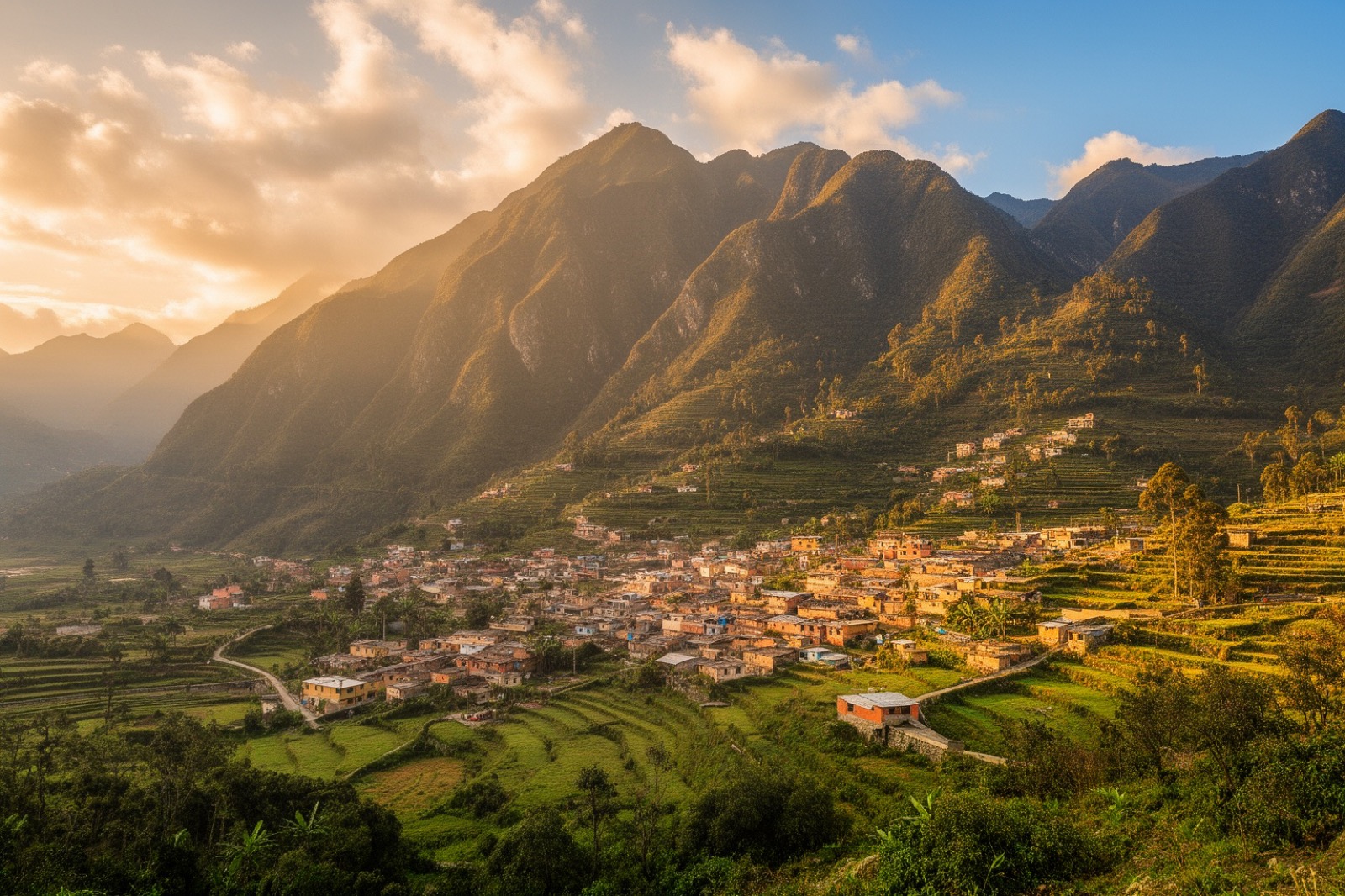
A tiny, gorgeous 'Valley of Longevity' in Ecuador's southern Andes with spring-like weather and dirt-cheap living — but remote, with only a basic local hospital (serious care is in Loja or Cuenca) and a small, churning expat scene.
For an American couple, Vilcabamba runs about $1,500 a month — though the trip home is a true long haul.
Vilcabamba by the numbers
Visa & residency for Americans
Ecuador's income-based residency requires at least US$1,446/month for the principal — exactly 3x the 2026 minimum wage (SBU US$482). The Pensioner (Jubilado) visa needs a document certifying a lifetime monthly pension at or above that figure (Social Security/government/corporate pensions qualify); the Rentista alternative accepts recurring passive/investment income (dividends, rental, annuities) that need not be lifetime-guaranteed. A dependent spouse without their own pension attaches for ~$250/month more (~$1,696 total). The temporary visa is valid 2 years, renewable once; permanent residency comes after 21 months, but you must not spend more than 90 days/year abroad in that period. Ecuador uses the US dollar, removing currency risk.
Your Ecuador residency, mapped to your situation
Where you're headed, who's going, and what you're working with — five questions puts your file on the desk. When a visa specialist clears our bar for your country, you're first in line for the introduction.
Map my Ecuador visa path →What living in Vilcabamba is actually like
The biggest limitation. Vilcabamba has only a small public facility, Hospital Básico Koquisi Otani — 24h emergency with observation and a few inpatient beds, plus basic consultations — but expat reviews describe very limited supplies and equipment, as expected of a rural 'basic hospital.' A few small private clinics/GPs cover everyday needs. For anything beyond basics you drive to Loja (~45 min), though its public hospital is described as inadequate; for advanced or complex care expats go to Cuenca (~4h+ by road), with Ecuador's better regional private hospitals. Live here only if you're healthy and fine traveling for care; nearest world-class care is effectively Cuenca or Quito.
Health cover for retiring in Ecuador
A broker that compares plans across the major international insurers — including plans that cover you past 65.
Compare plans for Ecuador →Classic eternal-spring valley at ~5,000-7,000ft: temperatures run roughly 55-80°F year-round, with warm, sunny days and cool nights — frequently cited as one of Ecuador's most pleasant climates. A drier season (May-Oct) is the nicest; the wetter season (Nov/Oct-Apr) peaks around February and can bring localized flooding or landslides in the surrounding mountains. The region is also seismically active. No A/C or heating typically needed.
Day-to-day life in Vilcabamba feels safe, quiet, and normal, and the southern highlands have a low-crime profile similar to Cuenca — far from the coastal-province violence that drives Ecuador's reputation (~88% of homicides are in five coastal provinces). That said, it isn't crime-free: petty theft occurs, and the expat community circulates reports of more serious incidents — home invasions and, rarely, assaults involving foreigners on outlying rural properties, which are more exposed than in-town housing. Ecuador's overall US State Dept advisory is Level 2 (highland Loja is not higher-risk). Women alone generally report it comfortable; the caveat is remote properties, not street crime.
For its tiny size, Vilcabamba has a notable, long-standing international expat community — retirees, artists, entrepreneurs, and alternative-lifestyle types drawn by the climate, scenery, and 'Valley of Longevity' mystique. But it's small and transient: people come and go, some visible daily, others appearing mainly on Sunday market day, and newcomers can feel like outsiders. Spanish is genuinely useful — English is limited outside the expat circle. Active Facebook groups help with landing.
Remote. The nearest airport is Loja's Camilo Ponce Enríquez (LOH, ~45 min away), with domestic flights to Quito and Guayaquil; from there you connect to the US (typically via Quito/Guayaquil to Miami, Houston, or Fort Lauderdale). Realistically a full travel day with one or two connections each way — Guayaquil-Miami is ~4.5h, but reaching Guayaquil/Quito adds a flight or long drive. One of the least US-convenient destinations.
Ecuador operates a TERRITORIAL tax system: tax residents (183+ days in a 12-month period) are taxed only on Ecuador-source income — foreign income, including US Social Security, pensions, and investment income, is generally 100% exempt from Ecuadorian tax. There is no US-Ecuador tax treaty and no totalization agreement, but the territorial system means double taxation is rarely an issue; US citizens still file US returns and can use the Foreign Tax Credit for any Ecuadorian tax paid. Ecuador's use of the US dollar also simplifies finances. Confirm specifics with a cross-border tax advisor — we are not tax advisors.
Getting your money to Vilcabamba
Move money across the border at the real exchange rate — the fee shown up front, and you see exactly what lands on the other side.
See how a transfer to Ecuador works →Partner-marked links may pay Second Summer a referral fee if you choose them. Rankings are never pay-to-rank. How partners work
Vilcabamba, weighed both ways
What’s good
- +Stunning Andean valley scenery and a near-perfect ~55-80°F spring-like climate year-round
- +Extremely low cost of living — a couple can live on ~$1,400-1,500/mo, country rentals from ~$350
- +Uses the US dollar — no currency risk and simpler finances
- +Territorial tax system: US pensions, Social Security, and investment income are exempt in Ecuador
- +Low-crime southern-highland setting, far from Ecuador's coastal violence
- +Reasonable income-based residency (~$1,446/mo) with a clear path to permanence and eventual citizenship
- +Tight-knit, long-standing international/alternative expat community for its size
Worth weighing
- –Only a basic local hospital — serious or complex care means driving to Loja or, realistically, Cuenca/Quito
- –Very remote: limited services, and you'll drive to Loja for anything beyond village basics
- –Among the least US-accessible destinations — trips home are full-day, multi-connection journeys
- –Small, transient expat scene where integration varies and newcomers can feel like outsiders
- –Limited English outside the expat circle — functional Spanish is genuinely needed
- –Wet-season landslides/flooding risk and a seismically active region
- –Isolated rural properties are more exposed to occasional home-invasion-type crime than in-town housing
Who Vilcabamba suits
Healthy, self-sufficient retirees seeking a tranquil, scenic, ultra-low-cost rural life · Nature-, wellness-, and alternative-lifestyle lovers drawn to the 'Valley of Longevity' · Budget-focused couples who value dollarized stability and tax-free foreign income · People content with a slow pace who don't need frequent, easy flights home
Anyone with chronic conditions or who needs reliable nearby specialist/emergency care · Retirees who want city amenities, nightlife, or a large English-speaking bubble · People who fly to the US often and need convenient connections · Those who'd find a tiny, remote, sometimes-cliquey village isolating
What a move to Vilcabamba actually costs
One form, and up to five international movers come back with real quotes for your move — compare prices before you commit.
Get my moving quotes →Sources & methodology · visa & advisory re-checked 2026-10-26SHOW
Go and see Vilcabamba first
Flights, a hotel, and a car for the scouting trip — booked in one place, through our travel shop.
See scouting trips to Vilcabamba →A month in Vilcabamba before you decide
The people who land happiest came and lived it first — the market, the bus, an ordinary Tuesday — before they signed anything. A furnished place by the week or the month is how you do that.
Partner-marked links may pay Second Summer a referral fee if you choose them. Rankings are never pay-to-rank.
Browse monthly stays in Vilcabamba on Vrbo →