Dubrovnik
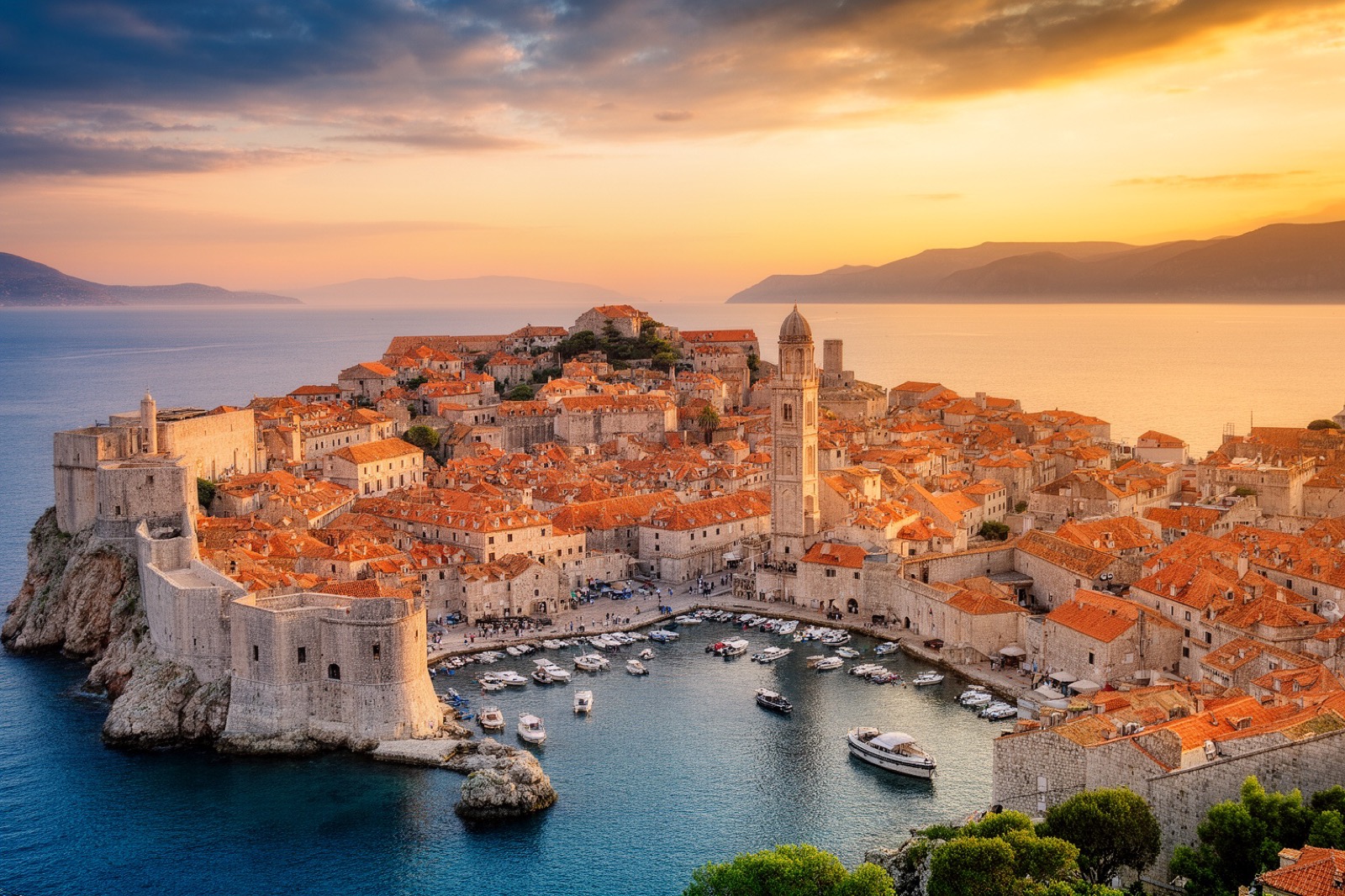
A breathtaking, very safe walled city on the Adriatic — but it's expensive, overrun by cruise crowds half the year, brutal for non-EU residency, and has only one seasonal nonstop to the US.
For an American couple, Dubrovnik runs about $3,150 a month — with the trip home a hop or a connection away.
Dubrovnik by the numbers
Visa & residency for Americans
Croatia has NO purpose-built retirement visa — one of the harder EU spots for non-EU retirees. Retirees generally use temporary residence for 'other purposes' / financial self-sufficiency: the income bar rose in January 2026 to 60% of the prior-year average net salary — €869.40/mo single, €1,086.75/mo couple (~$994 / ~$1,243) — proven via pension/savings, plus health insurance, accommodation, and a clean record. The catch is it's discretionary, granted one year at a time, renewed annually, and historically reluctant for this category — approvals can be inconsistent. Since Mar 2025, owners aged 60+ (and spouses) can also base a stay on property ownership. The digital-nomad permit is NOT an option for retirees (it needs active remote-work income). Expect significant time and bureaucracy; a local immigration lawyer is close to essential.
Your Croatia residency, mapped to your situation
Where you're headed, who's going, and what you're working with — five questions puts your file on the desk. When a visa specialist clears our bar for your country, you're first in line for the introduction.
Map my Croatia visa path →What living in Dubrovnik is actually like
Solid for a small city; world-class care is elsewhere. General Hospital Dubrovnik is the main public facility, with emergency care and core specialties; private options like Marin Med Clinic (strong in orthopedics, ophthalmology) and Poliklinika Analiza handle diagnostics and specialist visits with English-speaking staff and short waits, well below US prices. But for complex or tertiary treatment, expats typically travel — to Zagreb's university hospitals (~1h flight) or across the border. Most foreign residents use public HZZO once enrolled plus private clinics to skip referrals; dial 112 for emergencies. Nearest world-class care is effectively Zagreb.
Health cover for retiring in Croatia
A broker that compares plans across the major international insurers — including plans that cover you past 65.
Compare plans for Croatia →Mediterranean with mild winters. Summers (Jun-Aug) are hot and sunny — typical highs ~28-30°C, with sultry spells reaching 34-35°C, tempered by sea breezes. Humidity sits around 70% much of the year. Winters are among Croatia's mildest (daytime ~13°C, January lows ~6°C) but rainy and damp — snow is rare. Spring and autumn (May, September) are ideal. Plenty of sun, but pack for wet, blustery winter stretches.
Among the safest cities in Europe. Numbeo gives Dubrovnik an extraordinarily low crime index (~8.8) and it's been ranked Europe's safest city in multiple studies; Croatia has one of the continent's lowest violent-crime rates and a visible, professional police presence. Croatia carries a US State Dept Level 1 (Exercise Normal Precautions) advisory (Oct 2025). For residents and visitors alike, violent crime is rare; the realistic risks are warm-season pickpocketing and bag-snatching in the packed Old Town and at the cruise port, plus occasional taxi/tour overcharging. Women alone report feeling very safe day and night.
Small and somewhat insular. Despite the tourist throngs, Dubrovnik's permanent foreign-resident community is modest — many expats are there because they married a local. A few active expat groups serve as a support network, and English is widely spoken thanks to tourism, so daily life in English is feasible. But this isn't a deep, self-sustaining expat ecosystem like Lisbon, and non-EU residents repeatedly describe Croatia as a hard place to settle bureaucratically.
Better than you'd expect in summer, thin the rest of the year. Dubrovnik (DBV) has ONE nonstop to the US — United to Newark (~10h20m), but it's seasonal (roughly May-October). Outside that window, every US trip connects through a European hub: short hops to Frankfurt (~1h45m), plus Zagreb, Munich, Vienna, Istanbul. DBV serves ~70 destinations in summer but shrinks in winter. East-Coast access is easy in season; otherwise expect a connection.
Croatian tax residents (>183 days or habitual home) are taxed on worldwide income, including foreign pensions; pension income gets a 50% reduction on the calculated tax, so effective rates often land roughly in the 10-15% range. The big wrinkle: a US-Croatia tax treaty was signed (Dec 2022) and a protocol added (Apr 2026), but as of mid-2026 it is NOT YET in force — so Americans currently rely on US domestic mechanisms (foreign tax credits/exclusions) to avoid double taxation, and US citizens owe US tax on worldwide income regardless. This is a moving target; get cross-border tax advice and confirm treaty status before committing.
Getting your money to Dubrovnik
Move money across the border at the real exchange rate — the fee shown up front, and you see exactly what lands on the other side.
See how a transfer to Croatia works →Partner-marked links may pay Second Summer a referral fee if you choose them. Rankings are never pay-to-rank. How partners work
Dubrovnik, weighed both ways
What’s good
- +Stunningly beautiful walled Old Town on the Adriatic — one of Europe's iconic settings
- +Among the safest cities in Europe (very low crime; State Dept Level 1)
- +Mild Mediterranean winters and warm, sunny summers cooled by sea breezes
- +English widely spoken; easy to get by without Croatian day-to-day
- +Decent local healthcare with affordable English-speaking private clinics
- +Seasonal nonstop to Newark plus quick hops to major European hubs
- +Low official income bar for self-sufficiency residence (~€460-660/mo)
Worth weighing
- –Severe overtourism — up to ~27 visitors per resident at peak; cruise crowds dominate the Old Town (advance-booking entry to the walls from 2026)
- –No dedicated retiree visa, and Croatia is notoriously hard for non-EU residency — slow, discretionary, annual renewals
- –Expensive by regional standards — Dubrovnik is Croatia's priciest city; central 1BRs ~€700-1,200
- –Year-round rentals are scarce because landlords prefer lucrative tourist lets (and may evict for summer)
- –Only one US nonstop and it's seasonal; winter travel means connections
- –US-Croatia tax treaty not yet in force (mid-2026) — cross-border tax is unsettled
- –Small, insular expat community; many foreigners are there via Croatian spouses
- –Damp, rainy winters and a town that half-empties and shutters in the off-season
Who Dubrovnik suits
Couples who prize a spectacular, ultra-safe coastal setting and can afford it · EU passport holders (or those with a clear residency path) who sidestep the visa hassle · Lovers of walkable historic cities and the Adriatic who'll embrace shoulder-season living · People with a Croatian connection or who plan to buy property (60+ ownership route)
Non-EU retirees wanting an easy, retiree-specific visa and smooth bureaucracy · Budget retirees — this is Croatia's most expensive city with tight year-round rentals · Anyone who needs frequent, year-round nonstop US flights · People who dislike crowds and tourist saturation (the Old Town is overrun in summer) · Those wanting a large, established English-speaking expat community
What a move to Dubrovnik actually costs
One form, and up to five international movers come back with real quotes for your move — compare prices before you commit.
Get my moving quotes →Sources, methodology & recent updates · visa & advisory re-checked 2026-10-23SHOW
- Sep 18, 2026We re-checked a reported change to Dubrovnik's figures against official sources — no change; they stand as shown.
Go and see Dubrovnik first
Flights, a hotel, and a car for the scouting trip — booked in one place, through our travel shop.
See scouting trips to Dubrovnik →A month in Dubrovnik before you decide
The people who land happiest came and lived it first — the market, the bus, an ordinary Tuesday — before they signed anything. A furnished place by the week or the month is how you do that.
Partner-marked links may pay Second Summer a referral fee if you choose them. Rankings are never pay-to-rank.
Browse monthly stays in Dubrovnik on Vrbo →