Buenos Aires
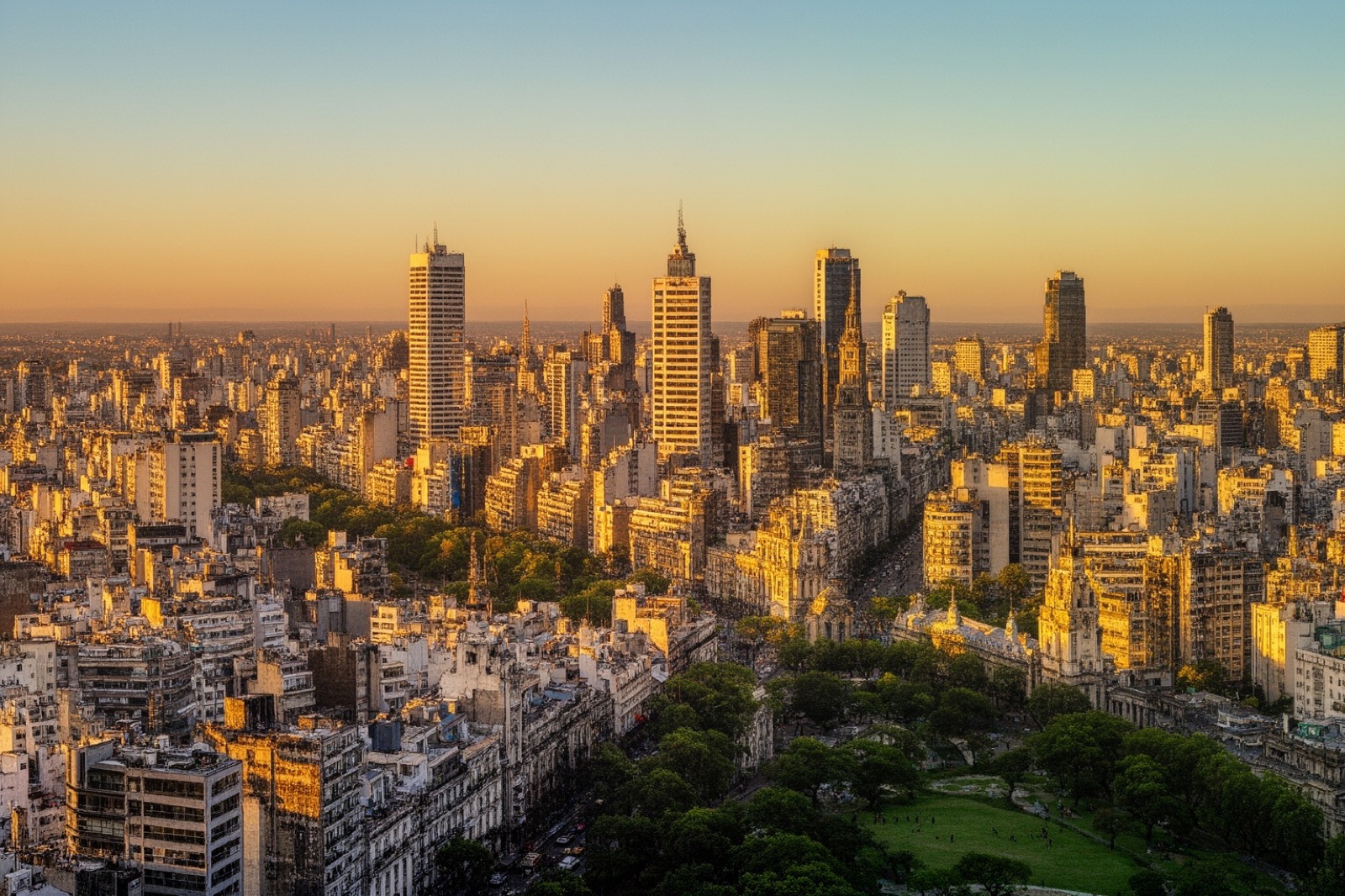
A grand, café-and-culture European-feeling capital with strong private hospitals and cheap-feeling living — but chronic inflation, peso chaos, motochorro phone-snatching, and a 10-hour flight home are the price.
For an American couple, Buenos Aires runs about $3,200 a month — though the flight home is a long one.
Buenos Aires by the numbers
Visa & residency for Americans
Two retiree-friendly routes. Pensionado: prove a permanent foreign pension/Social Security; Rentista: prove stable passive income from abroad (rentals, dividends, annuities). The legal floor is ~5x Argentina's minimum wage (a low bar at the official FX rate — roughly USD 1,300/mo, mid-2026), but immigration lawyers recommend documenting ~USD 2,000+/mo for clean approvals. Granted for one year, renewable, leading to permanent residency and citizenship eligibility after ~2 years — among the world's faster naturalization timelines. Apply via a consulate or in-country at Migraciones; documents need apostille and certified translation, and Argentine bureaucracy is slow and paperwork-heavy. Thresholds peg to the peso minimum wage, so verify current figures first.
Your Argentina residency, mapped to your situation
Where you're headed, who's going, and what you're working with — five questions puts your file on the desk. When a visa specialist clears our bar for your country, you're first in line for the introduction.
Map my Argentina visa path →What living in Buenos Aires is actually like
A genuine strength. Buenos Aires has top-tier private hospitals expats rely on — Hospital Alemán (German Hospital, Barrio Norte), Hospital Italiano, and the Hospital Británico — all with international standards and bilingual, frequently overseas-trained doctors; English-speaking specialists are easy to find in the private system. Most foreign residents buy private cover ('prepaga') such as Swiss Medical, OSDE, or Hospital Alemán's own plan (basic tiers ~$75-280/mo, rising steeply with age). Private care means short waits, modern facilities, and costs well below the US; the parallel public system is universal and free but slower. World-class complex care is in-city — no need to fly out.
Health cover for retiring in Argentina
A broker that compares plans across the major international insurers — including plans that cover you past 65.
Compare plans for Argentina →Humid subtropical with four real seasons (reversed from the US). Summers (Dec-Feb) are hot and sticky — January averages low-90s°F highs with 70-90% humidity and thunderstorms, so A/C matters. Winters (Jun-Aug) are mild but damp, ~46-58°F with chilly, poorly-heated interiors; frost is rare (a couple of mornings/yr). ~45 in rain/yr, spread year-round. Spring and autumn are the pleasant sweet spots.
Day-to-day, the upscale central barrios — Recoleta, Palermo (Soho/Hollywood), Belgrano, Puerto Madero — feel safe and walkable with police presence; violent crime against foreigners is uncommon and the homicide rate (~3-4/100k) is on par with mid-sized US cities, far below regional peers. The constant nuisance is petty crime: pickpocketing on the Subte and in crowds, bag-snatching, and 'motochorro' phone-grabs by thieves on motorbikes. Distraction scams and counterfeit-bill tricks target newcomers. Women report it manageable with normal big-city caution; keep phones out of sight and don't flash valuables. Argentina is US State Dept Level 1, with a Level 2 carve-out for Rosario (not BA).
A cosmopolitan capital with a sizeable, growing international presence, plus active Facebook groups, Internations meetups, and English-language services. English is fairly common in tourism, business, and among younger porteños and private-hospital doctors — but BA is a working Spanish-speaking metropolis, not a gringo bubble, so functional Spanish makes daily life far smoother. Easy to build a social life in English; harder to handle bureaucracy without Spanish.
Far south — the trade-off. Ezeiza (EZE) has US nonstops, but it's a long haul: Miami ~9h (American, LATAM, Aerolíneas Argentinas, daily), plus New York (American, Delta) and seasonal Houston (United, Jun-Aug). West Coast and most of the country require a connection via Miami, Houston, or São Paulo. Expect a full travel day each way and overnight red-eyes; not a place for frequent quick trips home.
Critical: there is NO US-Argentina tax treaty and no SS totalization agreement. Argentina taxes residents (broadly, permanent residents or those >12 months in-country) on worldwide income up to 35%, plus a 'Bienes Personales' wealth tax on worldwide assets above a high threshold. In practice it does not tax foreign SS, but foreign pensions/investment income can be taxable once you're a tax resident — and without a treaty you lean on the US foreign tax credit (Form 1116), not treaty relief, to avoid double taxation. Currency controls add complexity. US citizens still file with the IRS. Get cross-border tax advice before triggering residency.
Getting your money to Buenos Aires
Move money across the border at the real exchange rate — the fee shown up front, and you see exactly what lands on the other side.
See how a transfer to Argentina works →Partner-marked links may pay Second Summer a referral fee if you choose them. Rankings are never pay-to-rank. How partners work
Buenos Aires, weighed both ways
What’s good
- +World-class private hospitals (Alemán, Italiano, Británico) with bilingual, often US/Europe-trained doctors
- +Grand, walkable, European-feeling capital with extraordinary culture, café life, theater, and food
- +Argentina sits at US State Dept Level 1 (Rosario excepted); upscale barrios feel safe day-to-day
- +Living can feel inexpensive for a major capital — strong restaurants, wine, and culture at modest cost
- +Retiree-friendly rentista/pensionado visas with a relatively low income bar and a fast (~2yr) citizenship path
- +Argentina generally does not tax foreign Social Security; large, cosmopolitan international community
Worth weighing
- –Chronic high inflation and peso volatility make budgeting and pricing genuinely unpredictable year to year
- –No US-Argentina tax treaty or SS totalization agreement — worldwide-income tax residency risk for pensions/investments
- –Persistent petty crime: Subte pickpocketing, bag-snatching, and motorbike phone-grabs ('motochorros')
- –A long ~9-10h haul to the US with limited nonstops (mostly Miami/NYC) — not for frequent trips home
- –Currency controls, slow bureaucracy, and shifting rules add friction to banking, visas, and money transfers
- –Cold, damp, poorly-heated winters indoors and hot, humid, sticky summers requiring A/C
- –Spanish is needed for daily life and officialdom outside expat/tourist bubbles
Who Buenos Aires suits
Culture-hungry retirees who want a cosmopolitan big-city European feel in Latin America · Couples prioritizing excellent affordable private healthcare and rich urban life · People comfortable managing currency swings, inflation, and some bureaucratic friction · Foodies, tango/arts lovers, and walkable-city devotees who don't need a car
Anyone who needs a short, easy flight back to US family · Retirees wanting financial predictability and simple, treaty-protected taxes · Those unwilling to stay vigilant against pickpocketing and phone-snatching · Beach or warm-winter seekers, or English-only speakers wanting a turnkey expat bubble
What a move to Buenos Aires actually costs
One form, and up to five international movers come back with real quotes for your move — compare prices before you commit.
Get my moving quotes →Sources, methodology & recent updates · visa & advisory re-checked 2026-10-20SHOW
- Oct 6, 2026We updated Buenos Aires's visa income requirement to about $1,270/mo, from ~$1,254/mo. source ↗
- Sep 8, 2026We updated Buenos Aires's visa income requirement to about $1,254/mo, from ~$1,345/mo. source ↗
- Aug 4, 2026We updated Buenos Aires's visa income requirement to about $1,345/mo, from ~$1,330/mo. source ↗
- Jul 21, 2026We updated Buenos Aires's visa income requirement to about $1,330/mo, from ~$1,340/mo. source ↗
- Jul 14, 2026We updated Buenos Aires's visa income requirement to about $1,340/mo, from ~$2,000/mo.
Go and see Buenos Aires first
Flights, a hotel, and a car for the scouting trip — booked in one place, through our travel shop.
See scouting trips to Buenos Aires →A month in Buenos Aires before you decide
The people who land happiest came and lived it first — the market, the bus, an ordinary Tuesday — before they signed anything. A furnished place by the week or the month is how you do that.
Partner-marked links may pay Second Summer a referral fee if you choose them. Rankings are never pay-to-rank.
Browse monthly stays in Buenos Aires on Vrbo →