Punta del Este
South America's poshest, safest beach resort — but seasonal, Spanish-speaking, far from the US, and pricey by regional standards.
For an American couple, Punta del Este runs about $3,800 a month — though the flight home is a long one.
Punta del Este by the numbers
Visa & residency for Americans
Independent Means/Rentista residency requires demonstrating stable passive income (pension, rentals, dividends, annuities) of roughly USD $1,500/mo single, ~$2,500/mo couple (figures as of 2025-2026; not a fixed statutory amount — assessed case-by-case by DGI/immigration). No property purchase or investment required. Leads directly to permanent residency and a path to citizenship in ~3-5 years. Main friction is slow bureaucracy and document apostille/translation, not the income bar.
Your Uruguay residency, mapped to your situation
Where you're headed, who's going, and what you're working with — five questions puts your file on the desk. When a visa specialist clears our bar for your country, you're first in line for the introduction.
Map my Uruguay visa path →What living in Punta del Este is actually like
Solid private care locally: Sanatorio SEMM-Mautone (~80 doctors, 100+ beds, strong ER/surgery) and Sanatorio Cantegril (noted for English-speaking staff). Mutualista membership ~$100-200/mo per person; doctor visits ~$5-12. For English-speaking, top-tier acute care most expats rely on the British Hospital scheme in Montevideo (~$325-400+/mo, ~1.5-2 hrs away) — the nearest world-class hospital. English among doctors is more common here than rural Uruguay but not guaranteed.
Health cover for retiring in Uruguay
A broker that compares plans across the major international insurers — including plans that cover you past 65.
Compare plans for Uruguay →Temperate Atlantic-coast climate with four distinct seasons — NOT tropical or warm year-round. Hot, crowded summers (Dec-Feb, high 20s-30s C) and genuinely cold, damp, windy winters (Jun-Aug, ~8-14C) when much of the resort empties out. Retirees seeking constant warmth will be disappointed half the year.
US State Dept Level 2 (Exercise Increased Caution) for Uruguay, as of 2026 — driven by property crime in Montevideo/Maldonado and rising national crime stats. Punta itself is regularly called one of the safest resort cities in South America; main issues are summer-season property theft and pickpocketing in tourist zones. Very low violent-crime risk for residents using normal precautions.
Foreigners are ~15-20% of the permanent population, but the expat base is overwhelmingly Argentine and Brazilian (many seasonal second-home owners), with a smaller and more dispersed US/Canadian/UK/European contingent than hubs like Mexico or Portugal. Year-round Anglophone community is modest and thins dramatically in winter when seasonal residents leave.
Far from the US. No nonstop flights from Punta's own airport (PDP) to the US; you connect, or fly from Montevideo's Carrasco (MVD), ~1.5 hrs by car. American Airlines operates the main nonstop MVD-Miami (~9-10 hrs); most US itineraries run ~13-15 hrs total with a connection plus the airport drive. Workable for 1-2 trips/year, not for frequent family visits.
Territorial system: foreign pensions, US Social Security, and IRA/401(k) distributions are NOT taxed by Uruguay (foreign-source). HOWEVER, Law 20.446 (effective Jan 1, 2026) now treats most foreign capital income — dividends, interest, capital gains, foreign rents — as taxable at 12% IRPF for residents; new residents can elect a ~10-year exemption if conditions (183+ days presence or qualifying investment) are met. No US-Uruguay income tax treaty (TIEA only); US-Uruguay totalization agreement in force since Nov 1, 2018. Pensions stay exempt, but the old 'tax-free everything' reputation narrowed in 2026 — verify with a local accountant.
Getting your money to Punta del Este
Move money across the border at the real exchange rate — the fee shown up front, and you see exactly what lands on the other side.
See how a transfer to Uruguay works →Partner-marked links may pay Second Summer a referral fee if you choose them. Rankings are never pay-to-rank. How partners work
Punta del Este, weighed both ways
What’s good
- +Genuinely safe and politically/economically stable — Uruguay is among the most stable countries in Latin America
- +High-quality, affordable private healthcare with a clear escalation path to world-class English-speaking care in Montevideo
- +Foreign pensions and US Social Security are not taxed by Uruguay (territorial system)
- +Easy, low-bar passive-income residency (~$1,500/mo single) with a real path to permanent residency/citizenship
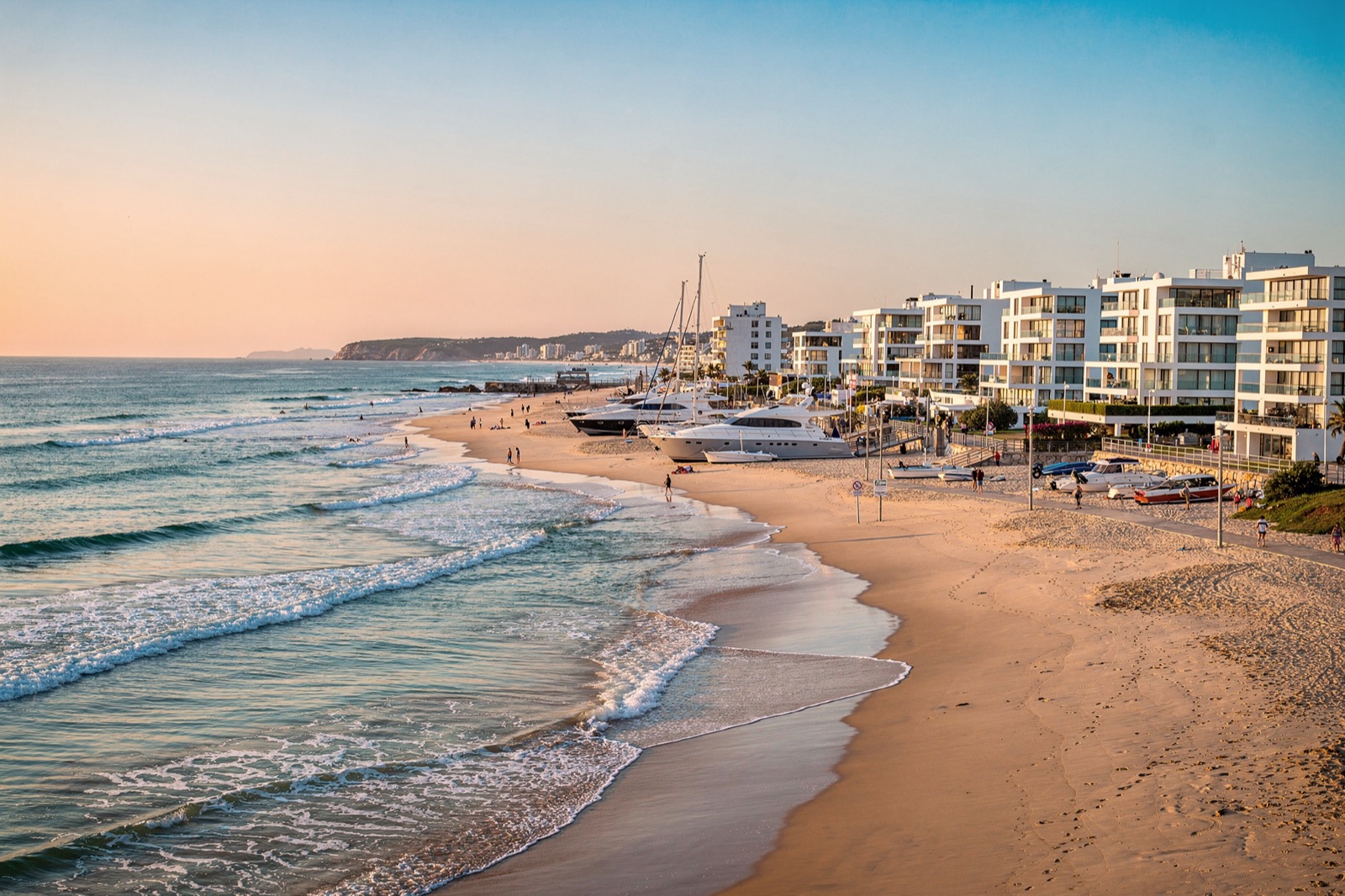
- +Polished, modern beach city — clean, walkable peninsula, good restaurants, marinas, golf; first-world feel rare in the region
- +Potable tap water, reliable infrastructure, and a sizable (if Latin-American-skewed) foreign community
Worth weighing
- –Cold, windy winters and an off-season 'ghost town' effect — it is NOT a warm-year-round destination
- –Expensive by South American standards — Uruguay is the priciest country in the region and Punta is its costliest city; rents double or triple in summer
- –Far from the US with no nonstop flights from PDP — every trip means a connection plus a Montevideo airport drive
- –Spanish is essential; English is limited outside tourism and upscale medical settings
- –2026 tax change (Law 20.446) now taxes foreign capital income (dividends/interest/cap gains) at 12% — the famous 'tax holiday' is narrower than its reputation, and there's no US tax treaty
- –Heavy seasonality means amenities, social life, and even medical scheduling swing wildly between summer and winter; many imported goods are costly
Who Punta del Este suits
Affluent retirees prioritizing safety, stability, and a polished beach lifestyle over cost · Pension-heavy households (foreign pension/Social Security stays tax-free) who don't need to minimize capital-gains tax · Couples who can summer in Punta and travel elsewhere in winter, or tolerate quiet off-seasons · Snowbirds wanting a Southern-Hemisphere base for the Nov-Mar season
Retirees who want consistent warm/tropical weather all year · Budget-focused couples trying to live well on $2,000-2,500/mo · Anyone unwilling to learn Spanish or live where English is uncommon · Those who need frequent, easy flights home to the US · People who want a buzzing year-round community rather than a seasonal resort rhythm
What a move to Punta del Este actually costs
One form, and up to five international movers come back with real quotes for your move — compare prices before you commit.
Get my moving quotes →Sources, methodology & recent updates · visa & advisory re-checked 2026-10-24SHOW
- Sep 12, 2026We updated Punta del Este's visa data — the retirement route no longer sets a monthly income requirement. source ↗
Go and see Punta del Este first
Flights, a hotel, and a car for the scouting trip — booked in one place, through our travel shop.
See scouting trips to Punta del Este →A month in Punta del Este before you decide
The people who land happiest came and lived it first — the market, the bus, an ordinary Tuesday — before they signed anything. A furnished place by the week or the month is how you do that.
Partner-marked links may pay Second Summer a referral fee if you choose them. Rankings are never pay-to-rank.
Browse monthly stays in Punta del Este on Vrbo →