San Sebastián
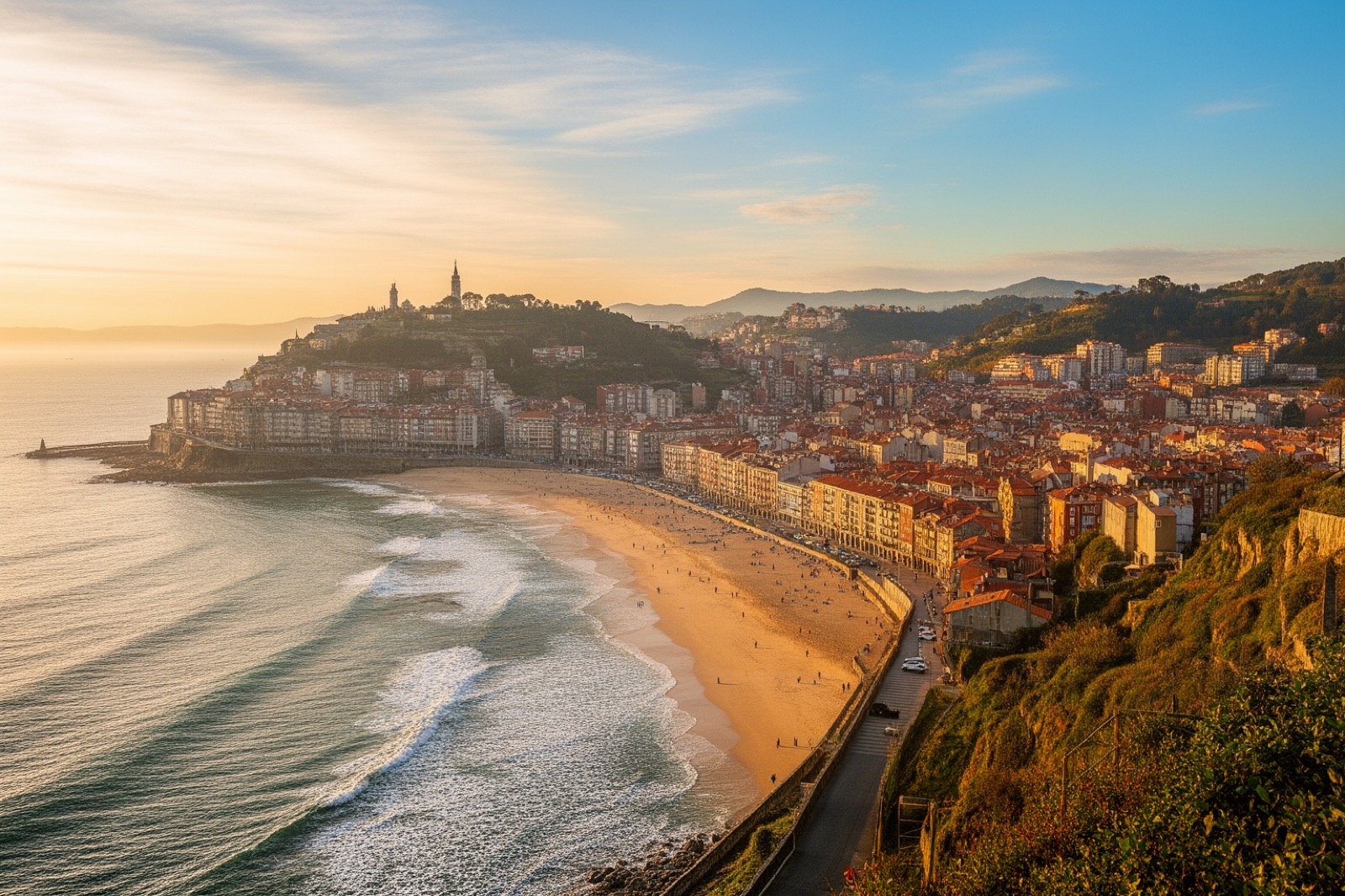
A jaw-droppingly beautiful, Michelin-dense Basque beach city with world-class public healthcare — but it's one of Spain's priciest, and the cool, rainy Atlantic climate is the opposite of sunny-Spain.
For an American couple, San Sebastián runs about $4,250 a month — though the flight home is a long one.
San Sebastián by the numbers
Visa & residency for Americans
Spain's Non-Lucrative Visa is the standard retiree path: prove ~€2,400/mo (€28,800/yr) in passive income for a single applicant, +€600/mo (€7,200/yr) per dependent — so a couple needs roughly €3,000/mo (~$3,420). Thresholds are pegged at 400% of IPREM, which stayed flat in 2026 (no new national budget passed). Qualifying income: pensions, Social Security, dividends, rental and investment income — NOT remote-work or employment income. Apply at a Spanish consulate in the US, with full-coverage private health insurance and a clean criminal record; the visa grants 1 year, then renews for 2-year blocks. Permanent residency after 5 years, citizenship eligibility at 10. Pitfalls: the NLV does not permit working, and consulate document demands (apostilles, translations) are exacting.
Your Spain residency, mapped to your situation
Where you're headed, who's going, and what you're working with — five questions puts your file on the desk. When a visa specialist clears our bar for your country, you're first in line for the introduction.
Map my Spain visa path →What living in San Sebastián is actually like
Excellent. Basque public healthcare (Osakidetza) consistently ranks #1 in Spain, anchored locally by Hospital Universitario Donostia — the Basque Country's largest hospital complex (~1,170 beds, 30 operating theaters, nearly all specialties). Private care centers on Policlínica Gipuzkoa (Quirónsalud group), a high-tech reference hospital with international-patient services. Residents get public coverage; many expats add private insurance (~€100-150/mo per person) for faster specialist access. English-speaking doctors exist privately but aren't guaranteed in public clinics. World-class tertiary care is in-city; Madrid/Barcelona are a short flight for the rarest cases.
Health cover for retiring in Spain
A broker that compares plans across the major international insurers — including plans that cover you past 65.
Compare plans for Spain →Temperate oceanic, NOT typical sunny Spain. Cool summers (Aug highs ~20-25C) and mild, damp winters (Jan ~8-13C) — it rarely freezes but it rains a lot. ~1,500mm/yr precipitation with rain possible in every month (driest is July; wettest Oct-Nov). Green, lush, and humid; the sun is often shy even in summer. The mild, wet, grey winters are the real climate downside.
Very safe by any standard. Numbeo Crime Index ~30 / Safety ~70 (2026), and the Basque Country is one of Spain's lowest-crime regions; violent crime against residents is rare. The realistic risk is petty theft — pickpocketing and bag-snatching in summer tourist crush around the Parte Vieja (Old Town), La Concha beach, and the bus/train stations. Women report feeling comfortable walking alone day and night in central areas. Note Spain's country-level US State Dept advisory is Level 2 (Exercise Increased Caution), driven by terrorism risk nationally — not a reflection of street danger in San Sebastián specifically.
International but not a retiree bubble. San Sebastián draws a cosmopolitan, well-heeled crowd and has a notable foreign-born population, plus the San Sebastián International Club for newcomers — but it's a working Basque city, not an anglophone enclave like the Costa del Sol or Lake Chapala. Daily life runs in Spanish and Basque (Euskera); locals appreciate any effort. Expect to use Spanish rather than coast on English, and to build community more slowly than in established expat hubs.
No nonstop US flights. The local airport (EAS) is tiny and domestic-focused; the real gateway is Bilbao (BIO), ~1h15m away by road, which now has a seasonal United nonstop to New York-Newark (~8h40m eastbound, roughly 3x/week, summer season). Year-round, the practical route is a connection via Madrid, Barcelona, or a European hub (Frankfurt, Lisbon, Paris) onward to the US. Plan on one stop and a long travel day for most US destinations.
Key Basque nuance: the Basque Country runs its OWN income tax under the Concierto Económico — Gipuzkoa (San Sebastián's province) sets its own IRPF brackets via Norma Foral, separate from common-territory Spain (rates similar, progressive to the mid-40s%). Tax residents (>183 days) are taxed on worldwide income, including foreign pensions. The US-Spain treaty prevents double taxation via foreign tax credits and generally reserves US Social Security to the US, but private pension/IRA/401(k) distributions are typically taxable where you reside. The Beckham flat-rate regime excludes pensions, so it rarely helps retirees. Get Basque advice.
Getting your money to San Sebastián
Move money across the border at the real exchange rate — the fee shown up front, and you see exactly what lands on the other side.
See how a transfer to Spain works →Partner-marked links may pay Second Summer a referral fee if you choose them. Rankings are never pay-to-rank. How partners work
San Sebastián, weighed both ways
What’s good
- +Spectacular setting — La Concha bay, beaches, and green hills in a compact, walkable city
- +One of the world's great food cities (pintxos culture, multiple Michelin stars)
- +Top-ranked Basque public healthcare (Osakidetza) plus strong private hospitals
- +Very safe, with low violent crime and an easy day-and-night feel
- +Rich Basque culture, festivals, surf, and outstanding quality of life
- +Cool, green summers are a relief if you dislike Spain's interior heat
- +Clear residency path (NLV) to permanent residency and eventual citizenship
Worth weighing
- –Among the most expensive cities in Spain — tight housing supply pushes rents high
- –Cool, grey, rainy climate (~1,500mm/yr) — not the sunny Spain many expect
- –No nonstop US flights; the long haul home routes through Bilbao or Madrid
- –Spanish plus some Basque is genuinely needed; thinner anglophone safety net
- –Worldwide-income taxation under the Basque foral system needs specialist advice
- –Spain's country-level State Dept Level 2 advisory (terrorism-driven)
- –Tourist-season pickpocketing in the Old Town and on the beaches
Who San Sebastián suits
Food-and-culture lovers who want a beautiful, walkable European beach city · Healthcare-first retirees who value top public hospitals · Couples who prefer cool, green summers over intense heat · Those willing to learn Spanish and integrate rather than live in a bubble
Budget retirees (this is one of Spain's priciest cities) · Sun-seekers who want warm, dry weather most of the year · Anyone who needs frequent, easy nonstop flights to the US · English-only retirees wanting a ready-made anglophone enclave
What a move to San Sebastián actually costs
One form, and up to five international movers come back with real quotes for your move — compare prices before you commit.
Get my moving quotes →Sources & methodology · visa & advisory re-checked 2026-10-21SHOW
Go and see San Sebastián first
Flights, a hotel, and a car for the scouting trip — booked in one place, through our travel shop.
See scouting trips to San Sebastián →A month in San Sebastián before you decide
The people who land happiest came and lived it first — the market, the bus, an ordinary Tuesday — before they signed anything. A furnished place by the week or the month is how you do that.
Partner-marked links may pay Second Summer a referral fee if you choose them. Rankings are never pay-to-rank.
Browse monthly stays in San Sebastián on Vrbo →