Pedasí
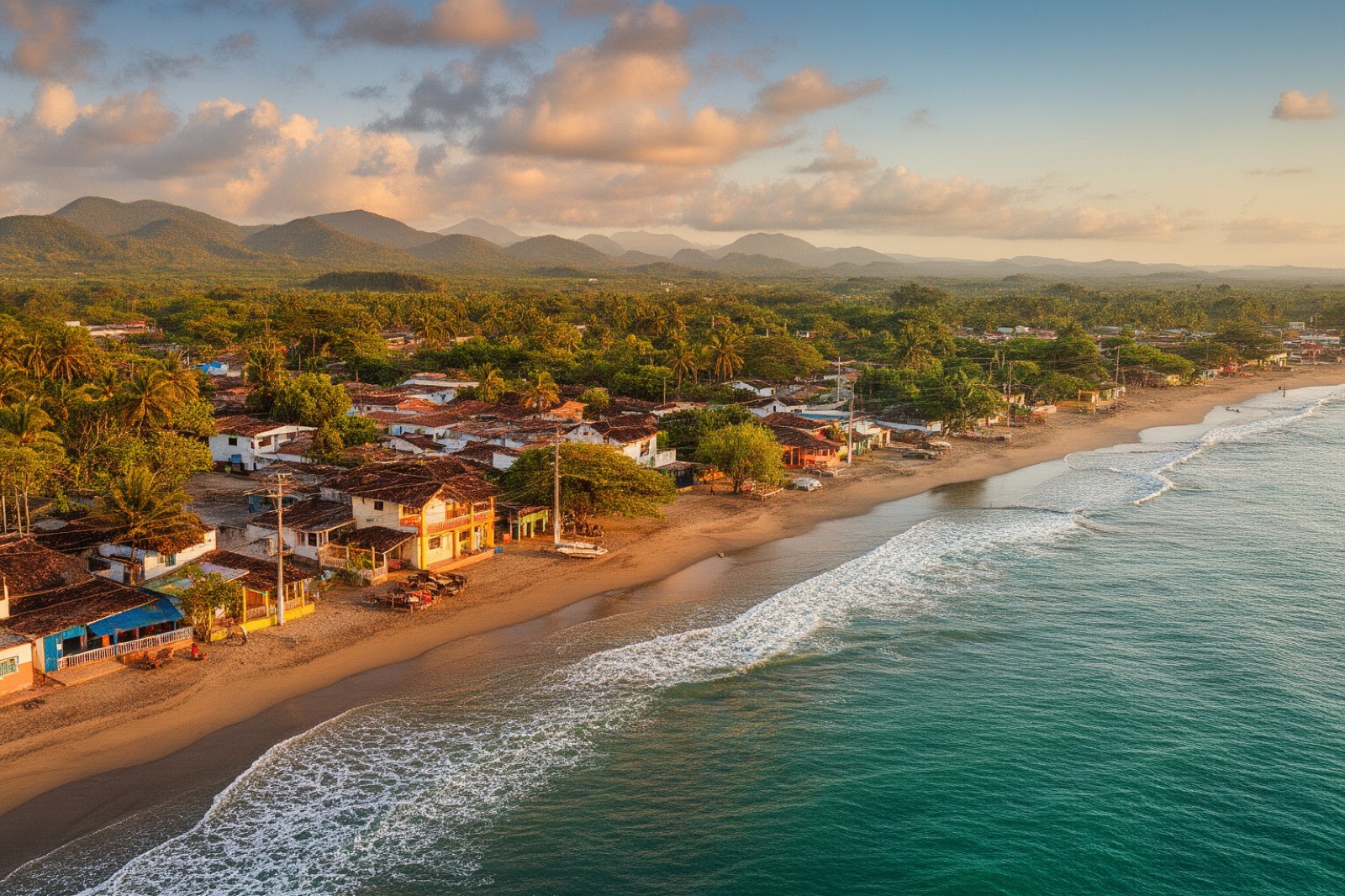
A safe, traditional Azuero fishing town with empty beaches, dry sunny weather, and a small tight-knit expat scene — but it's sleepy, far from Panama City, and serious healthcare means a drive to Chitré or a flight to the capital.
For an American couple, Pedasí runs about $2,200 a month — though the flight home is a long one.
Pedasí by the numbers
Visa & residency for Americans
Panama's Pensionado is among the easiest retiree visas anywhere: it requires a guaranteed lifetime pension of $1,000/mo for a single applicant (+$250 per dependent, so ~$1,250 for a couple), dropping to $750/mo if you purchase $100k+ in Panamanian property (as of 2026). US Social Security, government, military, and qualifying private pensions count, and the income letter must state the pension is permanent/for life. It grants permanent residency plus Panama's well-known retiree discounts on transport, medical care, entertainment, and dining. Use a Panamanian immigration attorney; documents require apostille and certified Spanish translation. Thresholds are stable but reconfirm before filing.
Your Panama residency, mapped to your situation
Where you're headed, who's going, and what you're working with — five questions puts your file on the desk. When a visa specialist clears our bar for your country, you're first in line for the introduction.
Map my Panama visa path →What living in Pedasí is actually like
Modest locally, decent regionally. Pedasí has a public Centro de Salud and a MINSA-CAPSI facility on the edge of town with 24-hr urgent care, lab, pharmacy, and ambulance — fine for everyday needs and stabilization. For real care, Chitré (~1hr drive) is the regional hub with public hospitals plus respected private clinics (Clínica San Juan Bautista, Clínica Dr. Venancio Villareal); the public Hospital Regional de Azuero in La Villa de Los Santos runs a cardiac program under a Johns Hopkins agreement. The nearest truly world-class facility is Hospital Punta Pacifica (Johns Hopkins affiliate) in Panama City — ~4-5hr drive or a flight. Routine consults ~$15-25. Carry private insurance with evacuation coverage; Medicare doesn't apply.
Health cover for retiring in Panama
A broker that compares plans across the major international insurers — including plans that cover you past 65.
Compare plans for Panama →Tropical savanna on the dry Pacific (Azuero) side — warm year-round, roughly 75-90°F, and notably sunnier and drier than Caribbean Panama or the highlands. Distinct dry season Dec-April (the Azuero's signature: dry, breezy, dusty) and a May-Nov rainy season that's mostly short afternoon downpours, not all-day rain. Coastal breezes help; humidity is lower than Bocas but A/C is still wanted in the hot months. No hurricane risk.
One of the safer corners of Panama. Pedasí is a small, traditional town where violent crime is rare and locals and the modest expat community mix easily; day-to-day life feels relaxed and low-threat. Panama overall sits at US State Dept Level 2 (Exercise Increased Caution, 2026), driven by big-city and specific remote zones, not the rural Azuero. Real local risks are limited to petty theft, occasional opportunistic break-ins (especially at empty/vacation homes), and rural night driving on unlit roads. Women generally report it as comfortable and easygoing. As anywhere, lock up and don't leave valuables in plain sight — but this is a low-anxiety place.
Small but real and welcoming. Pedasí has drawn a steady trickle of North American and European expats over the past 15+ years (the broader Azuero/Chitré area counts only a few hundred foreign residents, with Pedasí among the larger pockets), so there's a tight-knit social scene, some English-speaking services, and easy ways to plug in — but it's far from a 'gringo bubble.' This is a working Panamanian town where day-to-day Spanish is genuinely useful and integration with local life is the norm. Great for people who want community without an English-only enclave.
Remote. There are no nonstop US flights anywhere near Pedasí; you fly into Panama City's Tocumen (PTY) from US hubs, then either drive ~4-5 hours down the Azuero Peninsula or take a short domestic hop. Tiny Pedasí airport (PDM) has only ~40-min domestic flights to/from Panama City (Air Panama and others, limited frequency), so the realistic trip is a US flight plus a long drive or a connecting domestic flight — a full travel day each way. Not suited to frequent, quick visits home.
Panama is strictly territorial: foreign-source income — US pensions, Social Security, IRA/401(k) withdrawals, and offshore investment income — is not taxed by Panama even if remitted, so you can reside here without Panamanian tax on that money. Caveat: there is NO US-Panama tax treaty and no Social Security totalization agreement, so US citizens still file and owe US tax on worldwide income with no treaty relief (use the FEIE/foreign tax credit, though there's little Panama tax to offset). Get cross-border tax advice for your situation.
Getting your money to Pedasí
Move money across the border at the real exchange rate — the fee shown up front, and you see exactly what lands on the other side.
See how a transfer to Panama works →Partner-marked links may pay Second Summer a referral fee if you choose them. Rankings are never pay-to-rank. How partners work
Pedasí, weighed both ways
What’s good
- +One of the safest, most relaxed towns in Panama, with an authentic traditional Azuero feel
- +Dry, sunny weather most of the year — far less rain than Bocas or the highlands, and no hurricanes
- +Very affordable comfortable living (~$2,200/mo for a couple) with empty Pacific beaches nearby
- +Easy, low-income Pensionado visa ($1,000/mo) with permanent residency and retiree discounts
- +Territorial tax: US pensions, Social Security, and investments not taxed by Panama
- +Uses the US dollar — no currency risk; small, welcoming, non-bubble expat community
- +Decent regional healthcare an hour away in Chitré, including a Johns Hopkins-linked cardiac program
Worth weighing
- –Sleepy and small — limited dining, shopping, nightlife, and few big-town amenities
- –Far from Panama City: ~4-5hr drive or a limited domestic flight, and no nonstop US air links
- –Only basic healthcare in town; serious cases mean a drive to Chitré or a flight to the capital
- –You'll want functional Spanish for daily life — less English than resort/expat-hub towns
- –Hot dry-season heat plus a dusty, windy Azuero dry season; A/C still needed in hot months
- –Thin rental/services market and small-town infrastructure (occasional power/water hiccups)
- –No US tax treaty, so US worldwide tax still applies with no treaty relief
Who Pedasí suits
Retirees who want a safe, quiet, authentic Panamanian beach town over a resort or expat bubble · Sun-seekers who prefer dry, breezy Pacific weather to humid Caribbean rain · Lower-budget couples comfortable on ~$1,800-2,500/mo who don't need big-city amenities · People willing to use some Spanish and integrate with local life · Hurricane-averse beach lovers
Anyone with complex/ongoing medical needs wanting top hospitals minutes away · Retirees who need frequent, quick nonstop flights to US family · People who want city culture, nightlife, shopping, or a large English-speaking community · Those unwilling to learn any Spanish · Anyone who'd find a small, sleepy town isolating
Hand the Panama move to people who do it daily
A relocation concierge for Portugal, Panama, and Costa Rica — one team that takes the move from decision to settled-in.
See how StartAbroad handles Panama →Sources & methodology · visa & advisory re-checked 2026-10-23SHOW
Go and see Pedasí first
Flights, a hotel, and a car for the scouting trip — booked in one place, through our travel shop.
See scouting trips to Pedasí →A month in Pedasí before you decide
The people who land happiest came and lived it first — the market, the bus, an ordinary Tuesday — before they signed anything. A furnished place by the week or the month is how you do that.
Partner-marked links may pay Second Summer a referral fee if you choose them. Rankings are never pay-to-rank.
Browse monthly stays in Pedasí on Vrbo →