Puerto Vallarta
A polished Pacific beach city with the largest, most English-friendly expat scene in Mexico and excellent flight access — but it's humid, tourist-priced, and sits in a State-Dept Level 3 state.
For an American couple, Puerto Vallarta runs about $3,000 a month — and home is never far: quick nonstops to US hubs.
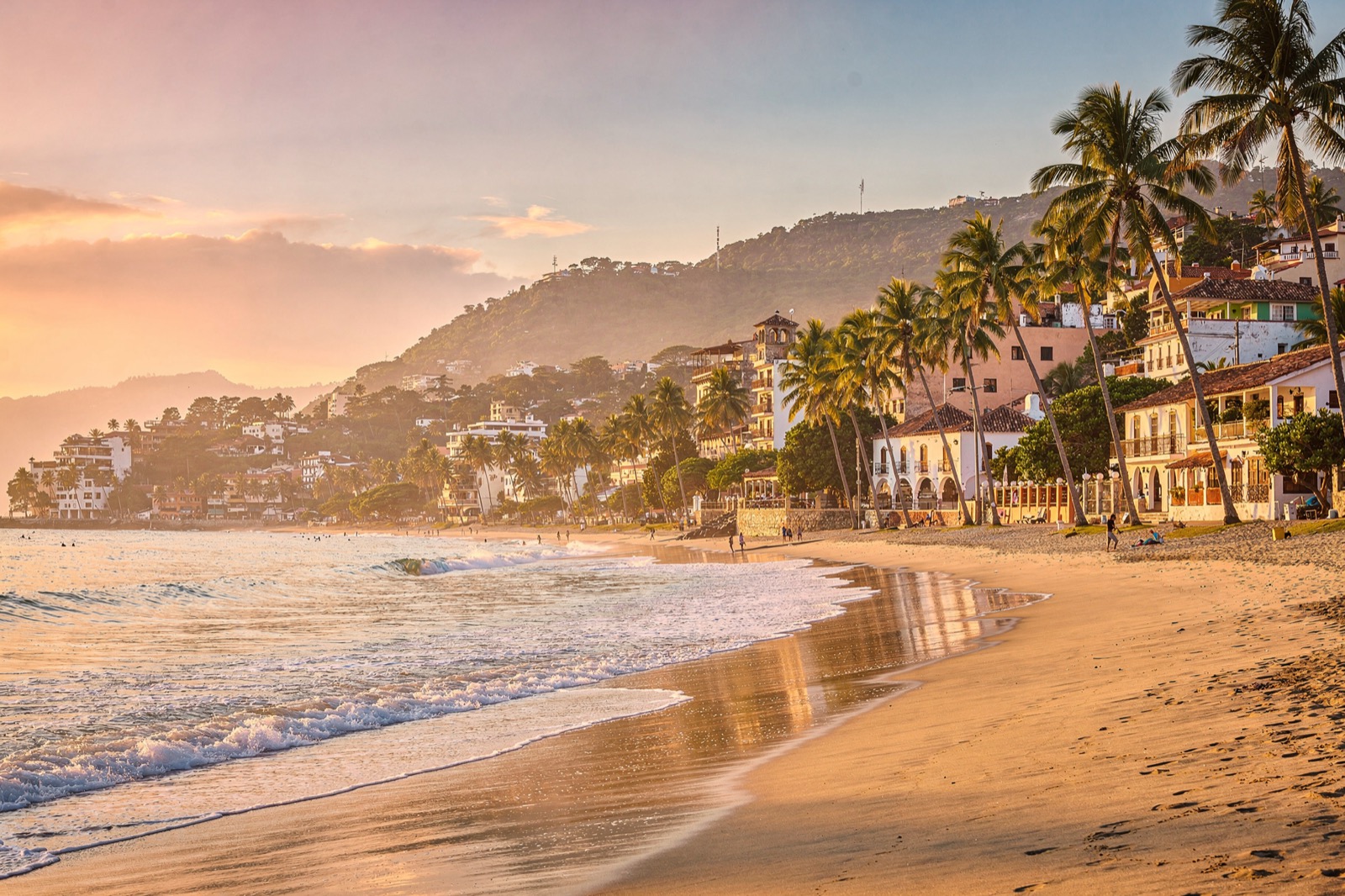
Puerto Vallarta by the numbers
Visa & residency for Americans
Apply at a Mexican consulate before arriving. As of 2026 the passive-income path requires ~US$4,400/month for the prior 6 months (single), OR ~US$74,000 in average savings/investments over 12 months. Add roughly US$1,500/month in income (or a correspondingly higher savings balance) for an accompanying spouse. Figures are tied to Mexico's UMA, recalculated annually (UMA set Jan 8 2026); the savings path is the realistic route for those on Social Security alone. Valid 1 year, renewable up to 4 years total, then convert to Permanent Resident.
Your Mexico residency, mapped to your situation
Where you're headed, who's going, and what you're working with — five questions puts your file on the desk. When a visa specialist clears our bar for your country, you're first in line for the introduction.
Map my Mexico visa path →What living in Puerto Vallarta is actually like
Strong private hospitals for routine and acute care — Hospital San Javier Marina and CMQ Premier are the expat go-tos with English-speaking doctors. Most facilities require upfront payment (cash/card) and do NOT take US Medicare or domestic insurance, so private expat health insurance is effectively mandatory. Nearest truly world-class/tertiary care is Guadalajara, ~3.5 hrs by road.
Health cover for retiring in Mexico
A broker that compares plans across the major international insurers — including plans that cover you past 65.
Compare plans for Mexico →Hot tropical climate, warm all year. Dry, near-perfect season Nov-Apr. May-Oct is the rainy season: highs around 90F with ~80-90% humidity that many find oppressive, plus tropical-storm and occasional hurricane risk in late summer.
Puerto Vallarta itself is among the safer tourist cities in Mexico — violent crime against foreigners in Zona Romántica, the Hotel Zone and Marina is rare, and the city/Riviera Nayarit are explicitly excluded from US-government travel restrictions. Caveats: petty/property crime is rising (SESNSP ~+7.6% YoY in 2025), and the broader state has serious cartel activity away from the coast.
One of the largest, most established expat/snowbird communities in Mexico — roughly 15,000 year-round residents swelling to ~45,000 in winter high season, heavily US/Canadian. Very LGBTQ-friendly. Easy to land softly; downside is it can feel like a North-American bubble rather than immersive Mexico.
Excellent access. PVR has nonstop flights to ~20 US cities (LA, Houston, Dallas, Denver, Phoenix, Chicago, Seattle, San Francisco, Atlanta, Salt Lake, Las Vegas, etc.); LAX alone runs ~80+ nonstops/week. Most US hubs are a 3-5 hr direct flight.
Mexico taxes tax-residents on worldwide income (worldwide system); non-residents are taxed only on Mexican-source income. The US-Mexico income tax treaty reserves taxation of US Social Security to the US (Mexico does not tax it). Private pensions/IRA/401(k) are taxable in your country of residence — if you become a Mexican tax resident you'd report them in Mexico and credit Mexican tax against US tax. Tax residency hinges on your 'center of vital interests', not an automatic 183-day rule. US tax treaty: yes.
Getting your money to Puerto Vallarta
Move money across the border at the real exchange rate — the fee shown up front, and you see exactly what lands on the other side.
See how a transfer to Mexico works →Partner-marked links may pay Second Summer a referral fee if you choose them. Rankings are never pay-to-rank. How partners work
Puerto Vallarta, weighed both ways
What’s good
- +Largest English-speaking expat/snowbird community in Mexico — very easy soft landing
- +Outstanding flight connectivity: ~20 nonstop US destinations, short 3-5 hr hops home
- +Good private healthcare with English-speaking doctors at a fraction of US prices
- +Walkable beachfront living (Zona Romantica) with world-class restaurant and arts scene
- +Warm all year with a near-perfect Nov-Apr dry season
- +Very LGBTQ-friendly and welcoming to North Americans
Worth weighing
- –Tourist- and USD-pegged economy makes it pricier than inland Mexico (Merida, Lake Chapala, Oaxaca)
- –May-Oct rainy season is hot, very humid (~80-90%) and carries hurricane/tropical-storm risk
- –Located in Jalisco, a US State Dept Level 3 'Reconsider Travel' state (PV itself carved out, but optics/insurance matter)
- –Rising petty and property crime; high-season crowds, traffic and seasonal rental scarcity
- –Can feel like a North-American expat bubble rather than authentic Mexico
- –World-class tertiary hospitals are 3.5 hrs away in Guadalajara; US Medicare not accepted, so private insurance is a must
Who Puerto Vallarta suits
Beach-loving retirees who want an easy, English-friendly soft landing · Snowbirds wanting frequent, short nonstop flights back to the US · Socially active couples who value a big expat community and dining/nightlife · LGBTQ retirees
Budget retirees stretching a modest Social Security check (inland Mexico is cheaper) · People who can't tolerate heat and high summer humidity · Those wanting deep cultural immersion away from tourists/expats · Anyone who needs frequent in-town access to top-tier specialist hospitals
The honest deep guide
What it's really like
The most polished, English-friendly beach city in Mexico, with the country's largest beach expat scene. Zona Romantica is walkable, dining and arts are strong, the water is warm year-round, and the city is famously LGBTQ-welcoming. The foreign population is roughly 15,000 year-round and can swell toward 45,000 in winter. Flight access is a core advantage, with about 20 nonstop U.S. destinations and many trips back to U.S. hubs in 3-5 hours.
Who it fits
Beach-loving retirees who want an easy, social, English-friendly landing; snowbirds who value frequent short nonstops; LGBTQ retirees; and couples prioritizing lifestyle over lowest possible cost.
Who it doesn't
Budget retirees, people who cannot tolerate hot humid summers, immersion seekers, and anyone needing top specialist hospitals in town.
Cost reality
~$3,200/month comfortable for a couple. The economy is tourist-priced and often USD-pegged, with beachfront living pushing meaningfully higher.
Healthcare access
Private care is strong for routine and acute needs, with San Javier Marina and CMQ Premier among the expat go-tos and English-speaking doctors common. Most hospitals require upfront payment and do not accept U.S. Medicare. Tertiary care generally means Guadalajara, roughly 3.5 hours by road.
The real cons
- Tourist pricing makes it much more expensive than inland Mexico.
- May through October is hot, roughly 80-90% humid, and carries hurricane or tropical-storm risk.
- Jalisco is Level 3, even though Puerto Vallarta is carved out from restrictions.
- Petty and property crime, high-season crowds, and seasonal rental scarcity have risen.
- The North American bubble is strong.
- Top-tier tertiary hospitals are hours away.
Sources, methodology & recent updates · visa & advisory re-checked 2026-10-25SHOW
- Oct 25, 2026We re-checked a reported change to Puerto Vallarta's figures against official sources — no change; they stand as shown.
- Oct 18, 2026The U.S. State Department moved Puerto Vallarta from Level 2 to Level 3 (Reconsider Travel).
- Oct 4, 2026The U.S. State Department moved Puerto Vallarta from Level 3 to Level 2 (Exercise Increased Caution).
- Aug 30, 2026The U.S. State Department moved Puerto Vallarta from Level 2 to Level 3 (Reconsider Travel).
Go and see Puerto Vallarta first
Flights, a hotel, and a car for the scouting trip — booked in one place, through our travel shop.
See scouting trips to Puerto Vallarta →A month in Puerto Vallarta before you decide
The people who land happiest came and lived it first — the market, the bus, an ordinary Tuesday — before they signed anything. A furnished place by the week or the month is how you do that.
Partner-marked links may pay Second Summer a referral fee if you choose them. Rankings are never pay-to-rank.
Browse monthly stays in Puerto Vallarta on Vrbo →