Mexico City
A world-class big city with elite healthcare and incredible culture, but it's dense, high-altitude, and the 2026 visa income bar is now steep for retirees.
For an American couple, Mexico City runs about $2,900 a month — and home is never far: quick nonstops to US hubs.
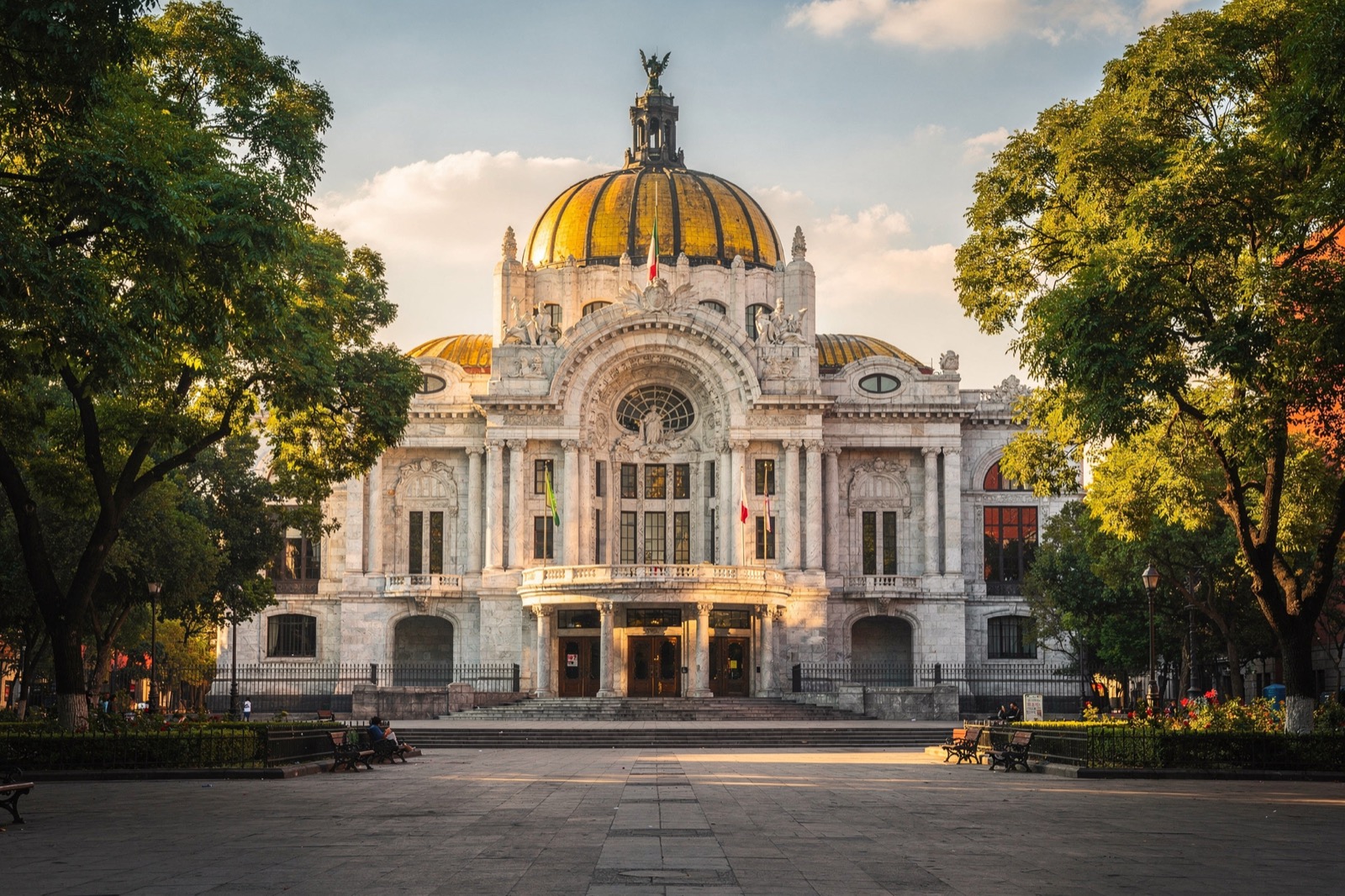
Mexico City by the numbers
Visa & residency for Americans
Applied at a Mexican consulate abroad, then finalized in-country. As of 2026 (figures effective Jan 2026, after a July 2025 shift to UMA-based calculations and a Jan 1 2026 doubling of card fees): Temporary Resident requires ~$4,400/mo proven net income over the last 6 months OR ~$74,000 average savings over 12 months. Permanent Resident (which retirees/pensioners can apply for directly from abroad on financial grounds) requires ~$7,300/mo income OR ~$294,000 savings. Consulates add roughly 10-20% to thresholds for a spouse/dependent and use slightly different exchange rates, so amounts vary by consulate. The income bar rose meaningfully in 2025-26 and now excludes many Social-Security-only retirees; the savings path is the more realistic route for them.
Your Mexico residency, mapped to your situation
Where you're headed, who's going, and what you're working with — five questions puts your file on the desk. When a visa specialist clears our bar for your country, you're first in line for the introduction.
Map my Mexico visa path →What living in Mexico City is actually like
Genuinely world-class private care. Centro Medico ABC (JCI-accredited, two campuses) and Medica Sur (Mayo Clinic Care Network affiliate, top-ranked in Mexico) both run International Patient departments with US/Canada-trained, English-speaking doctors. Acute and specialist care is excellent and on-site, so no need to fly out for serious care. GP visits ~$30-80, specialists ~$50-150; expat private insurance ~$100-300/mo. The nearest world-class hospital is in the city itself. This is arguably the single strongest reason to choose CDMX.
Health cover for retiring in Mexico
A broker that compares plans across the major international insurers — including plans that cover you past 65.
Compare plans for Mexico →High-altitude (7,350 ft / 2,240 m) subtropical highland climate: mild, spring-like days year-round (60s-70s F) but cool nights, especially Nov-Feb, and most homes lack central heating. Distinct May-Oct rainy season. Not a warm beach climate; it is temperate and dry-cool, which many love but pure sun-seekers won't.
US State Dept country advisory is Level 2 ("exercise increased caution," as of 2026), and CDMX is NOT one of the six Level 4 cartel states. Day-to-day expat risk is petty crime: pickpocketing on the metro, phone snatching, occasional express kidnapping via street taxis. Mitigations are standard and effective: live in Roma, Condesa, Polanco, Coyoacan or San Angel; use Uber/Didi not street cabs; stay alert at night. Numbeo's crime index (66/100, Jun 2026) is high but reflects perception across all ~22M metro residents; vetted expat neighborhoods feel far safer than that number implies.
One of the largest US/Canadian expat hubs in Mexico, though skewed toward working professionals, digital nomads, entrepreneurs and creatives more than traditional retirees (retirees more often pick San Miguel de Allende, Lake Chapala/Ajijic or Merida). In CDMX, expat life clusters in Roma, Condesa and Polanco. Recent influxes have driven gentrification tension and rent inflation in those neighborhoods, which has caused some local friction.
Excellent connectivity: Benito Juarez Intl (MEX) plus the newer Felipe Angeles (NLU) offer abundant nonstops to US hubs on Aeromexico, American, United and Delta. Typical times: Miami ~3h30m, LA ~3h35m, Houston/Dallas under 3h, NYC ~5h25m, SF ~4h15m. Easy, cheap, frequent trips home, a real plus for visiting US family.
Mexico taxes residents on WORLDWIDE income (top rate 35%), but a US-Mexico tax treaty exists: US Social Security is taxable only in the US (Article 19; Mexico does not tax it even for residents). Private pension/IRA/401(k) income may be taxable in the country of residence, with Article 24 foreign-tax-credit relief against double taxation. No US-Mexico Social Security totalization agreement.
Getting your money to Mexico City
Move money across the border at the real exchange rate — the fee shown up front, and you see exactly what lands on the other side.
See how a transfer to Mexico works →Partner-marked links may pay Second Summer a referral fee if you choose them. Rankings are never pay-to-rank. How partners work
Mexico City, weighed both ways
What’s good
- +World-class private healthcare (ABC, Medica Sur) with English-speaking, US-trained doctors right in the city
- +Extraordinary culture, dining, museums, music and walkable historic neighborhoods (Roma, Condesa, Coyoacan)
- +Mild spring-like climate year-round; no brutal heat or cold
- +Short, cheap, frequent nonstop flights to most US hubs
- +Large, established international community; easy to build a social life in expat-heavy districts
- +US Social Security is treaty-exempt from Mexican tax
Worth weighing
- –2026 visa income bar (~$4,400/mo temporary, ~$7,300/mo permanent) now excludes many Social-Security-only retirees; savings path needed
- –Air pollution is a real recurring problem; CDMX had only 3 'good' air-quality days in the first ~7 weeks of 2026, a concern for older lungs/hearts
- –High altitude (7,350 ft) causes shortness of breath, fatigue and poor sleep for some; can aggravate cardiac/respiratory conditions
- –Petty crime (metro pickpocketing, phone snatching, street-taxi express kidnapping) requires constant city-smarts
- –It's a dense megacity of ~22M: traffic, noise, crowds and occasional water-supply issues; not for those wanting calm or nature
- –Earthquake-prone; periodic seismic risk
- –Rising rents and gentrification friction in the prime expat neighborhoods
Who Mexico City suits
Culturally curious, active retirees who want a true world-city lifestyle · Those who prioritize top-tier medical access above all · Foodies, museum-goers and the socially outgoing · Retirees with strong savings or pension/investment income (not SS-only) who can clear the visa bar
Social-Security-only retirees who can't meet the 2026 income/savings thresholds · Anyone with asthma, COPD, serious heart disease or altitude sensitivity · Beach/warm-weather seekers · People wanting a quiet, small-town, low-stress pace · Those uncomfortable with big-city petty-crime vigilance
The honest deep guide
What it's really like
A genuine world city, with museums, food, and walkable neighborhoods such as Roma, Condesa, and Coyoacan. Its strongest retirement argument is elite in-city healthcare: Centro Medico ABC is JCI-accredited, Medica Sur is a Mayo Clinic Care Network affiliate, and both have international-patient departments. The climate is mild and spring-like rather than beach-warm. The expat scene skews more working professional, creative, and nomad than traditional retiree.
Who it fits
Culturally curious, active retirees who want true world-city life; people putting top-tier medical access first; food and museum lovers; and retirees with enough pension, investment income, or savings to clear the residency bar.
Who it doesn't
Social-Security-only retirees who cannot meet 2026 thresholds, asthma/COPD/heart or altitude-sensitive retirees, beach seekers, quiet-small-town seekers, and anyone uncomfortable with big-city petty-crime vigilance.
Cost reality
~$3,100/month comfortable for a couple in a nice Roma, Condesa, or Polanco apartment, with cheaper options outside prime neighborhoods.
Healthcare access
The strongest healthcare access in Mexico is in-city, so serious care does not usually require flying out. GP visits run roughly $30-80, specialists roughly $50-150, and private insurance is often quoted around $100-300/month depending on age and health.
The real cons
- The 2026 visa bar of roughly $4,400/month temporary or $7,300/month permanent excludes many Social-Security-only retirees.
- Recurring air pollution can matter for older lungs and hearts.
- At roughly 7,350 ft, altitude can affect breathlessness and sleep.
- Petty crime requires vigilance, including metro pickpocketing and avoiding street taxis in favor of Uber or Didi.
- Traffic, noise, earthquake risk, and gentrification friction are part of daily life.
Sources, methodology & recent updates · visa & advisory re-checked 2026-10-21SHOW
- Jul 22, 2026We re-checked a reported change to Mexico City's figures against official sources — no change; they stand as shown.
Go and see Mexico City first
Flights, a hotel, and a car for the scouting trip — booked in one place, through our travel shop.
See scouting trips to Mexico City →A month in Mexico City before you decide
The people who land happiest came and lived it first — the market, the bus, an ordinary Tuesday — before they signed anything. A furnished place by the week or the month is how you do that.
Partner-marked links may pay Second Summer a referral fee if you choose them. Rankings are never pay-to-rank.
Browse monthly stays in Mexico City on Vrbo →