Plovdiv
One of Europe's cheapest cities with a 10% flat tax, a real pensioner visa, and an easy US-treaty tax story — but small-airport isolation and thinner specialist healthcare are the price.
For an American couple, Plovdiv runs about $1,850 a month — though the trip home is a true long haul.
Plovdiv by the numbers
Visa & residency for Americans
Bulgaria offers a genuine retiree pathway — unlike Czechia and Hungary. You first get a Type D long-stay visa (~EUR 100) at a consulate, then apply in-country (Migration Directorate) for a pensioner residence permit. Core requirement: prove stable pension income at least equal to the Bulgarian minimum wage (~EUR 620/mo, here ~$710), OR show savings (a bank certificate historically ~12x the minimum pension) as a 'well-off pensioner'. You'll also need a notarized lease or property, an SSA benefit letter (US retirees), a clean criminal record, and either private insurance (~EUR 80-200/mo) or NHIF enrollment after establishing residence. Processing is ~4-8 weeks; the permit is renewable and, over years, leads toward long-term residence. Confirm current thresholds with your consulate.
Your Bulgaria residency, mapped to your situation
Where you're headed, who's going, and what you're working with — five questions puts your file on the desk. When a visa specialist clears our bar for your country, you're first in line for the introduction.
Map my Bulgaria visa path →What living in Plovdiv is actually like
Adequate for a mid-size city, with a clear public/private gap. Plovdiv has modern private options — Medline private hospital and the multi-site City Clinic group are the expat go-tos, and private clinics here routinely have English-speaking, often internationally trained doctors (and very affordable dentistry). Public hospitals are cheaper but crowded, dated, and English is scarce. Routine and many specialist needs are well covered locally and inexpensively; for the most complex or cutting-edge care, expats head to larger Sofia facilities (~1.5h drive / ~100km) or fly to Western Europe. Private insurance runs roughly EUR 30-150/mo; tap water meets EU standards.
Health cover for retiring in Bulgaria
A broker that compares plans across the major international insurers — including plans that cover you past 65.
Compare plans for Bulgaria →Temperate continental with four seasons and big swings. Summers are hot, sunny, and relatively dry — frequently 35-38C/95-100F at the peak, but heat feels 'dry' rather than muggy. Winters are cold: January mean ~1C/34F, nights to -10C/14F, occasional deep cold. Only ~500mm rain/yr (driest in winter, wettest in May). Spring and autumn are the sweet spots. A real winter, plus genuinely hot summers — not mild year-round.
Reassuringly low-crime. Bulgaria carries a US State Dept Level 1 (Exercise Normal Precautions, Oct 2025). Plovdiv is widely described by residents as one of the safest larger cities in the Balkans, with rare violent crime and a calm, walkable center. The realistic risks are petty: pickpocketing and bag theft in crowded spots and on transport, occasional taxi overcharging, and standard scam awareness. Women generally report feeling safe; catcalling/unwanted attention can occur at night or around bars, as anywhere. Note: organized-crime/corruption issues exist at a societal level but rarely touch resident foreigners' daily life.
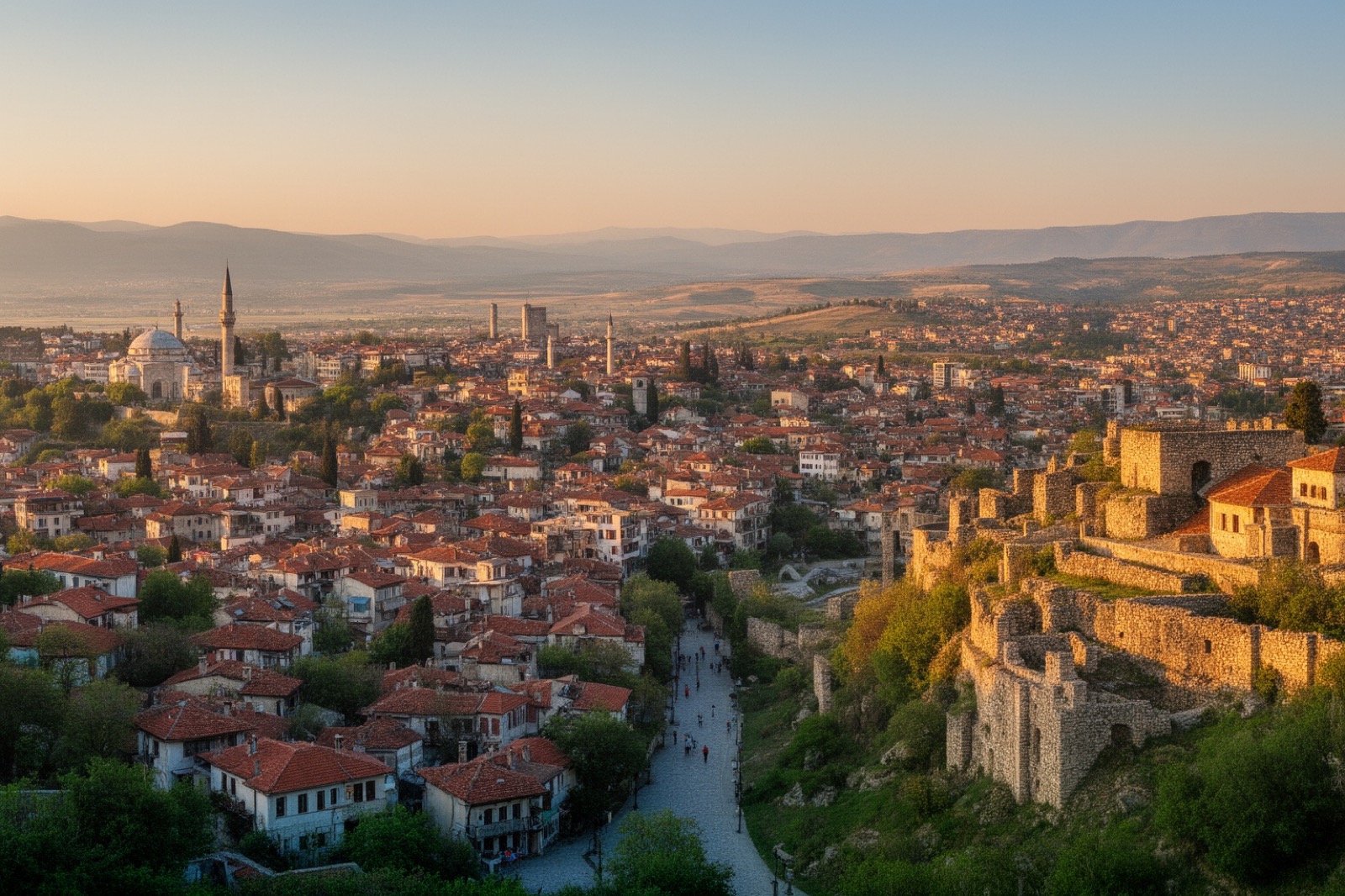
Smaller and quieter than the big capitals. Bulgaria draws a steady trickle of British, German, and other foreign retirees (many to villages and the coast), and Plovdiv — Bulgaria's cultural 'second city' with a Roman amphitheatre and lively arts scene — has a modest but growing foreign and digital-nomad presence and more English speakers than smaller towns. Still, it's no packaged enclave: support networks are thinner than Lisbon or Mérida, and Bulgarian (in Cyrillic) helps daily.
Far and connection-heavy. Plovdiv's own airport (PDV) has very limited service, so realistic travel runs through Sofia (SOF), ~100km / ~1.5-3h away by road or bus. There are no nonstop flights from Bulgaria to the US — any US trip routes through a European hub (Frankfurt, Vienna, Munich, Istanbul), totaling ~14-16h+ door to door. This is one of the least US-convenient options on the list; plan on long travel days home.
Among the friendliest setups in Europe for US retirees. Bulgaria has a flat 10% personal income tax — the EU's lowest — and a US-Bulgaria tax treaty has been in force since 2008. Foreign private pensions are generally taxable in Bulgaria at 10% if you're a tax resident, while US Social Security is generally taxable only in the US under the treaty. No US-Bulgaria totalization agreement, so Social Security contribution coordination doesn't exist. Bulgaria adopted the euro on Jan 1, 2026 (lev converted at 1.95583), simplifying currency. US citizens still file and may owe US tax; confirm specifics with a cross-border advisor.
Getting your money to Plovdiv
Move money across the border at the real exchange rate — the fee shown up front, and you see exactly what lands on the other side.
See how a transfer to Bulgaria works →Partner-marked links may pay Second Summer a referral fee if you choose them. Rankings are never pay-to-rank. How partners work
Plovdiv, weighed both ways
What’s good
- +Among the cheapest cities in the EU — a couple lives comfortably on roughly $1,900/mo
- +Flat 10% income tax with a US tax treaty in force since 2008 (clean tax story)
- +A real, attainable pensioner residence pathway (unlike Czechia/Hungary)
- +Very safe (State Dept Level 1) with a calm, walkable, beautiful old town
- +Affordable private clinics and very cheap dentistry with English-speaking doctors
- +EU/eurozone member (euro adopted 2026) with good internet and drinkable tap water
- +Rich, low-cost cultural and café life as Bulgaria's arts capital
Worth weighing
- –Poor US connectivity — no nonstops; everything routes via Sofia (~1.5-3h away) and a European hub
- –Specialist/complex healthcare is thinner; the most serious cases mean Sofia or Western Europe
- –Cold winters and genuinely hot (35-38C) summers — not mild year-round
- –Smaller, thinner expat support network than the big-name destinations
- –Bulgarian in Cyrillic is needed for daily life and bureaucracy outside private clinics
- –Societal corruption/organized-crime reputation (low day-to-day impact, but real)
- –Euro changeover has stirred worries about price inflation on the ground
Who Plovdiv suits
Budget-focused retirees who want EU residency and a very low cost of living · Tax-sensitive Americans who value a clean 10% flat rate and a US treaty · Culture-minded couples happy in a walkable mid-size city · People who don't fly home often and can tolerate long travel days
Retirees who want frequent, short, or nonstop flights to the US · Anyone needing top-tier specialist care close at hand · Sun-seekers who want warm winters (this is a real four-season climate) · Those who want a large, ready-made English-speaking expat bubble
What a move to Plovdiv actually costs
One form, and up to five international movers come back with real quotes for your move — compare prices before you commit.
Get my moving quotes →Sources & methodology · visa & advisory re-checked 2026-10-22SHOW
Go and see Plovdiv first
Flights, a hotel, and a car for the scouting trip — booked in one place, through our travel shop.
See scouting trips to Plovdiv →A month in Plovdiv before you decide
The people who land happiest came and lived it first — the market, the bus, an ordinary Tuesday — before they signed anything. A furnished place by the week or the month is how you do that.
Partner-marked links may pay Second Summer a referral fee if you choose them. Rankings are never pay-to-rank.
Browse monthly stays in Plovdiv on Vrbo →